
Litigation Real Estate Attorney: Florida Property Guide

TL;DR:
- A litigation real estate attorney in Florida helps property owners and buyers resolve disputes involving property rights. They handle cases from breach of contract to title conflicts and construction defects, guiding clients through each litigation stage. Choosing an experienced, local specialist improves the chances of protecting your investment and resolving disputes efficiently.
A litigation real estate attorney is a lawyer who represents property owners and homebuyers in legal disputes involving real property, from failed purchase contracts to title conflicts and construction defects. In Florida, where the real estate market moves fast and the legal rules are specific, having the right real estate dispute lawyer can mean the difference between recovering your investment and losing it entirely. This guide explains what these attorneys do, what disputes they handle, what litigation actually costs, and how to choose the right one for your situation in Florida.
What does a litigation real estate attorney handle in Florida?
The formal industry term is “real estate litigator,” though most people search for a litigation real estate attorney when they need someone to fight for their property rights in or out of court. These attorneys do far more than draft contracts. They represent clients through the full arc of a dispute, from the first demand letter through discovery, mediation, and trial if necessary.

Florida’s real estate laws are detailed and unforgiving. Statutes like Florida Statute § 689.25 govern seller disclosure obligations, while Florida Statute § 558.004 sets strict notice requirements before a construction defect lawsuit can be filed. A real estate litigator must know these rules cold. A general civil attorney who dabbles in property law often misses procedural deadlines or fails to spot statutory defenses that can change the outcome of a case entirely.
The attorneys at Oldham Law PLLC bring a background that most firms cannot match. Their experience as former prosecutors and insurance defense lawyers gives them a clear view of how opposing parties build their cases, which shapes how they build yours.
Common types of real estate disputes in Florida
Florida property disputes fall into several well-defined categories. Knowing which type you are facing helps you understand the legal tools available and the urgency of getting counsel involved.
Breach of purchase agreements. A buyer or seller fails to perform under the contract. Common examples include a seller refusing to make agreed repairs, a buyer walking away without a valid financing contingency, or a closing that falls apart due to undisclosed liens. If you need to understand what happens when a seller hides problems, the guide on property disclosure failures covers your legal options in detail.
Non-disclosure of material defects. Under Florida law, sellers must disclose known defects that materially affect the value of a property. Florida Statute § 689.25 specifically addresses certain conditions like sinkholes and environmental hazards. When sellers stay silent, buyers have grounds for litigation.
Title and boundary disputes. Competing claims to ownership or unclear property lines create serious problems for buyers and existing owners alike. A quiet title action is the legal mechanism Florida courts use to resolve these conflicts and establish clear ownership.
Construction defect claims. Defective workmanship, code violations, and structural failures are common in Florida’s active building market. Before filing suit, Florida Statute § 558.004 requires the property owner to serve a written construction defect notice on the contractor at least 60 days in advance. Skipping this step can get your case dismissed before it starts.
Landlord-tenant conflicts. Commercial and residential lease disputes, including wrongful eviction claims and rent withholding, frequently escalate to litigation when the parties cannot reach an agreement.
Each of these disputes carries its own procedural rules and deadlines. Missing one can cost you the case regardless of how strong your underlying claim is.
What does the litigation process look like in Florida?
Florida real estate litigation follows defined stages: pre-suit demand, filing the complaint, discovery, mediation, and trial. Understanding each stage helps you set realistic expectations about time and money.
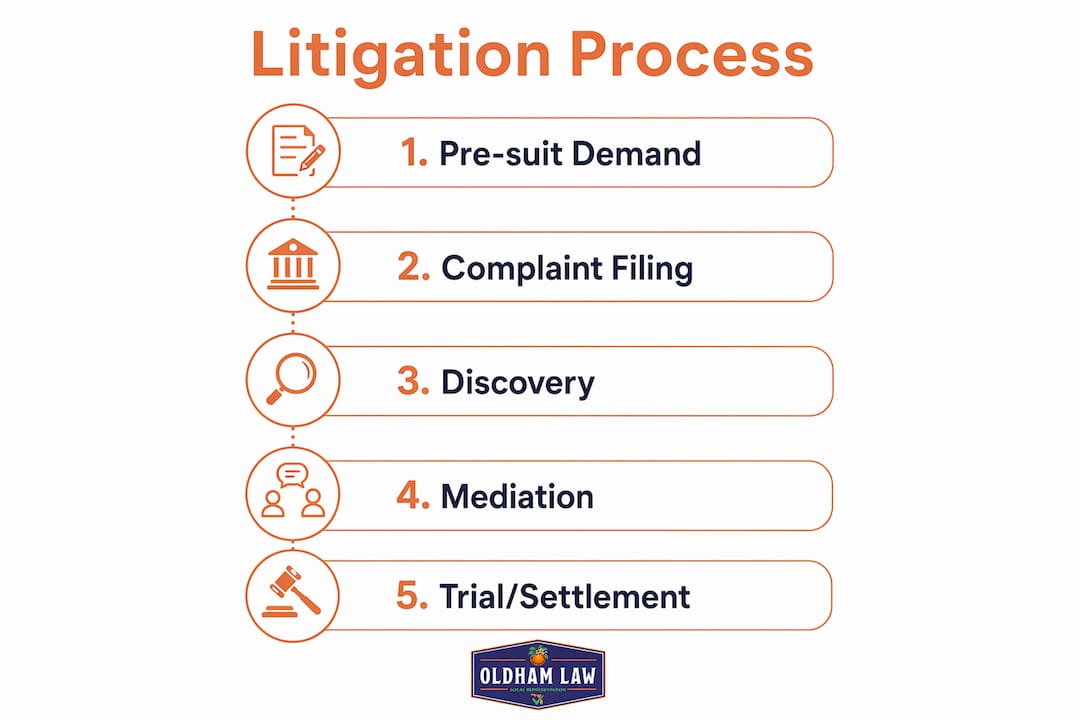
| Stage | Typical Timeline | Key Notes |
|---|---|---|
| Pre-suit demand | 1–4 weeks | Written demand sent; response period begins |
| Filing and service | 2–6 weeks | Defendant has 20 days to respond after service |
| Discovery | 2–10 months | Depositions, document requests, expert reports |
| Mediation | 1 day session | Mandatory before trial in most Florida courts |
| Trial | 1–5 days | Rare; most cases resolve before this stage |
Real estate litigation costs in Florida range from $5,000–$15,000 for simple mediation cases to $100,000–$300,000 or more for full trials. That range reflects how dramatically complexity and duration affect total fees. A straightforward deposit dispute resolved at mediation costs a fraction of what a multi-party construction defect trial costs.
One factor that shapes settlement decisions more than most people expect is the prevailing party attorney fee clause. These clauses appear in many Florida real estate contracts and mean the losing party pays both sides’ legal fees. That creates real pressure to settle early, because the financial risk of losing at trial doubles.
Less than 5% of Florida real estate cases reach a full trial. That statistic reflects how effective mediation is, not how weak the claims are. Mediation is mandatory before trial in most Florida circuits, and a skilled attorney uses that session to extract maximum value for the client.
Pro Tip: Ask your attorney early whether your contract contains a prevailing party fee clause. If it does, your opponent faces the same financial exposure you do, which often makes them more willing to settle on reasonable terms.
How do you choose the right real estate litigation attorney in Florida?
Choosing the right attorney is not about finding the biggest firm or the lowest hourly rate. It is about finding someone with the specific skills your dispute requires.
Verify real estate litigation experience. A general civil litigator and a specialized real estate litigator are not the same. Real estate disputes require someone who can read a deed, interpret an easement, and understand a boundary survey. That “real estate literacy” is not something you can fake in court.
Confirm Florida court familiarity. Local court rules and judicial preferences vary across Pinellas, Hillsborough, and surrounding counties. An attorney who regularly appears in Tampa Bay area courts knows the procedural expectations that can affect your case.
Ask about trial experience. Most cases settle, but your attorney’s willingness and ability to go to trial shapes how the other side negotiates. An attorney with no trial experience has less leverage at the mediation table.
Treat the consultation as a two-way interview. The initial consultation is your chance to evaluate the attorney’s communication style, strategic thinking, and how well they understand your specific facts. Come with questions, not just documents.
Ask about staff support and communication. Will a paralegal handle your calls, or will the attorney stay directly involved? Knowing who manages your file day to day prevents frustration later.
Understand their approach to negotiation versus litigation. The best attorneys pursue negotiated resolution aggressively while preparing for trial simultaneously. That dual-track approach protects your timeline and your budget.
Pro Tip: Bring a written timeline of events to your first consultation. Attorneys can assess your case faster and more accurately when the facts are organized, and it signals that you are a prepared, serious client.
Practical tips for protecting your interests during Florida real estate litigation
The actions you take before and during litigation directly affect your outcome. These steps are not optional extras. They are the foundation of a strong case.
Preserve all evidence immediately. Save every email, text message, contract, inspection report, and photograph related to the dispute. Courts rely on documentary evidence, and gaps in the record hurt credibility.
Comply with Florida’s notice requirements. Construction defect claims require 60 days’ written notice before filing suit under Florida Statute § 558.004. Missing this step can result in dismissal.
Get a current boundary survey if your dispute involves property lines. Mortgage surveys often lack the legal precision required for boundary litigation. A licensed Florida survey conducted after the dispute arises carries far more weight in court than the one your lender ordered at closing.
Understand what a lis pendens means. When litigation is filed over real property, a lis pendens notice is recorded in the public record. It alerts potential buyers and lenders that the title is in dispute. This can freeze a sale or refinance, so timing matters.
Use mediation strategically. Mediation is not a formality. It is a structured negotiation where a neutral third party helps both sides find common ground. Early preparation and a clear settlement position going in can resolve your dispute in a single day at a fraction of trial costs.
Set realistic expectations. Even strong cases take time. A typical Florida real estate dispute runs 12–36 months from filing to resolution. Knowing that timeline upfront helps you plan financially and emotionally.
Key Takeaways
A litigation real estate attorney in Florida is a specialized advocate whose knowledge of state statutes, local court procedures, and property law directly determines how well your interests are protected in a dispute.
| Point | Details |
|---|---|
| Specialization matters | Real estate litigators interpret deeds, surveys, and statutes that general civil attorneys often miss. |
| Costs vary widely | Simple mediation cases cost $5,000–$15,000; full trials can exceed $300,000 in Florida. |
| Most cases settle | Less than 5% of Florida real estate disputes reach trial; mediation resolves the majority. |
| Notice deadlines are critical | Construction defect claims require 60 days’ written notice before filing under Florida Statute § 558.004. |
| Fee clauses shift dynamics | Prevailing party clauses mean the losing side pays both attorneys, which drives earlier settlements. |
What I have learned about real estate litigation in Florida
After working with property owners and homebuyers across Tampa Bay, one pattern stands out clearly. The clients who come in early, before they have sent the angry email or signed the settlement they do not understand, consistently get better results. The clients who wait until the situation has fully deteriorated often face narrower options and higher costs.
The biggest misconception I see is that litigation means going to trial. It almost never does. What litigation really means is building a case so thoroughly that the other side decides settling is smarter than fighting. That preparation starts on day one, not the week before mediation.
Another thing worth saying plainly: the attorney-client relationship is a working partnership. Clients who stay engaged, respond to requests quickly, and ask questions when they do not understand something help their own cases. The attorney handles the legal strategy, but the client holds facts and context that no one else has.
The balance between negotiation and courtroom advocacy is not a choice you make once. It shifts as the case develops. A good real estate litigator reads that shift and adjusts. That flexibility, grounded in real Florida litigation experience, is what separates adequate representation from genuinely effective counsel.
— Oldham Law PLLC
Real estate litigation support from Oldham Law PLLC
Property disputes in Florida move quickly, and the decisions you make in the first weeks often shape everything that follows.
Oldham Law PLLC represents homebuyers and property owners across St. Petersburg, Pinellas Park, and the broader Tampa Bay area in real estate disputes of all types. The firm’s attorneys bring experience from both the prosecution and insurance defense sides of litigation, which means they understand how opposing parties think and how to counter it. Every case gets focused attention and a strategy built around your specific facts, not a generic playbook. If you are facing a property dispute and need clear answers about your options, visit Oldham Law PLLC to learn more about the firm’s real estate legal services and schedule a consultation.
FAQ
What is a litigation real estate attorney?
A litigation real estate attorney is a lawyer who represents clients in legal disputes involving real property, including contract breaches, title conflicts, and construction defects. They handle cases through negotiation, mediation, and trial when necessary.
How long does real estate litigation take in Florida?
Most Florida real estate disputes run 12–36 months from filing to resolution, depending on complexity. Cases that settle at mediation resolve faster; those that proceed to trial take longer.
What does real estate litigation cost in Florida?
Costs range from $5,000–$15,000 for simple mediation cases to $100,000–$300,000 or more for full trials. The final amount depends on case complexity, the number of parties, and how far the dispute progresses.
Do I need to give notice before suing for a construction defect in Florida?
Yes. Florida Statute § 558.004 requires property owners to serve written notice on the contractor at least 60 days before filing a construction defect lawsuit. Skipping this step can result in dismissal.
What is a prevailing party attorney fee clause in a Florida real estate contract?
A prevailing party clause requires the losing side in litigation to pay both parties’ attorney fees. These clauses appear in many Florida real estate contracts and significantly increase the financial risk of going to trial, which often encourages earlier settlement.
Recommended
- Property Damage Attorney Florida: Your 2026 Legal Guide – Oldham Law PLLC
- When a Property Owner Fails to Disclose Issues on a Real Estate Contract: Guide – Oldham Law PLLC
- How To Evict A Tenant In Florida: A Landlord’s Guide – Oldham Law PLLC
- Commercial Property Closing Costs: A Florida Guide – Oldham Law PLLC
