
Lender’s Title Insurance Policy: Florida Buyer’s Guide

TL;DR:
- A lender’s title insurance policy protects the lender’s mortgage lien but does not cover the buyer’s equity. Buyers should also purchase an owner’s policy to ensure full protection against title defects that could threaten their ownership rights. Buying both policies simultaneously can significantly reduce costs and provide ongoing protection through refinancing.
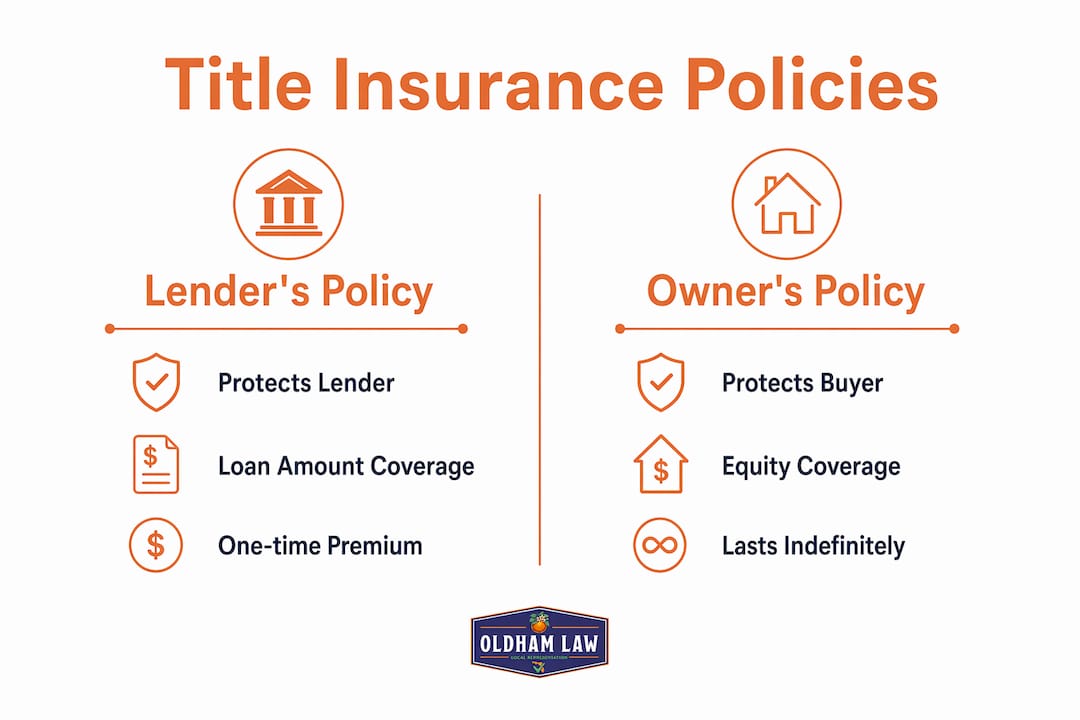
A lender’s title insurance policy is defined as a one-time premium insurance product that protects your mortgage lender’s financial interest in your Florida property against title defects. Every Florida buyer financing a home purchase must obtain this coverage. The policy covers the outstanding loan balance, not your equity or ownership rights. That distinction matters more than most buyers realize. Understanding what this policy does and does not cover helps you make smarter decisions at the closing table, including whether to purchase an owner’s policy alongside it.
What does a lender’s title insurance policy cover?
A lender’s title insurance policy generally protects the lender’s mortgage lien against a specific set of title risks. Those risks include undisclosed liens, unknown heirs with ownership claims, forged documents in the chain of title, and errors in public records. The policy insures the lender up to the outstanding loan balance at any given time.

Coverage decreases as you pay down your mortgage. This is a critical point many buyers miss. If your loan balance drops from $300,000 to $200,000 over several years, the lender’s policy only covers $200,000 at that point. The policy does not grow with your equity. It shrinks with your debt.
The loan policy of title insurance also has a defined end date. It terminates upon loan payoff, refinance, or sale of the property. The moment your mortgage is satisfied, the lender’s protection disappears. A new refinance triggers a brand new lender’s policy requirement, which means a new premium.
- Covered risks: undisclosed liens, forgery, unknown heirs, survey errors, and recording mistakes
- Coverage amount: tied to the outstanding loan balance, not the property value
- Duration: active only while the mortgage is in place
- Beneficiary: the lender, not the buyer
Pro Tip: Request your Closing Disclosure before settlement day and find the lender’s title insurance line item. Confirm the premium matches Florida’s promulgated rate for your loan amount.
How much does a lender’s title insurance policy cost in Florida?
Florida title insurance premiums are set by the Office of Insurance Regulation and are uniform across all licensed title insurers in the state. No insurer can charge more or less than the published rate. This protects buyers from price shopping confusion, but it also means the only real variable is which title company you choose for service quality.
The lender’s policy premium is calculated on the loan amount using a tiered rate schedule. The rate per thousand dollars of coverage decreases as the loan amount increases. For a $300,000 loan, the premium is meaningfully different from a $600,000 loan, so your specific number matters.
Here is a simplified illustration of how Florida’s tiered rate structure works:
| Loan amount tier | Approximate rate per $1,000 |
|---|---|
| $0 to $100,000 | $5.75 per $1,000 |
| $100,001 to $1,000,000 | $5.00 per $1,000 |
| $1,000,001 to $5,000,000 | $2.50 per $1,000 |
| Over $5,000,000 | $2.25 per $1,000 |
Note: These figures reflect Florida’s promulgated rate tiers. Confirm exact rates with your title agent at closing.
The most important cost fact for Florida buyers is the simultaneous-issue discount. When you purchase both the owner’s and lender’s policies at the same closing, Florida’s promulgated rates reduce the lender’s policy premium to a flat $25. That is a significant saving on what would otherwise be a several-hundred-dollar premium.
Florida law and lender requirements establish that the buyer always pays the lender’s title insurance premium when mortgage financing is involved. This is not negotiable. The owner’s policy payment, however, follows county custom and can be negotiated in the purchase contract.
- Buyer always pays the lender’s policy premium
- Owner’s policy payment varies by county custom
- Simultaneous issue drops the lender’s policy cost to $25
Pro Tip: Always purchase your owner’s and lender’s policies simultaneously. The $25 flat rate for the lender’s policy at simultaneous issue makes buying both policies together the most cost-efficient choice by far.
How does the lender’s policy differ from the owner’s policy?
The lender’s policy and the owner’s title insurance policy serve two completely different people. The lender’s policy protects the bank. The owner’s policy protects you. That single sentence explains why buying only the required lender’s policy leaves you exposed.
The lender’s title insurance policy does not cover your equity or ownership interests. If a title defect surfaces after closing, any claim payment goes directly to the lender. You receive nothing unless you also hold an owner’s policy. Imagine buying a $400,000 home, building $100,000 in equity over five years, and then discovering a forged deed in the chain of title. The lender gets paid. You lose your equity.
The owner’s policy, formally called the mortgagee’s title insurance policy counterpart for buyers, lasts indefinitely. It protects you and your heirs as long as any of you hold an interest in the property. It does not expire when you pay off the mortgage.
| Feature | Lender’s policy | Owner’s policy |
|---|---|---|
| Who it protects | The mortgage lender | The buyer and heirs |
| Coverage amount | Outstanding loan balance | Full purchase price |
| Duration | Until loan payoff or refinance | Indefinitely |
| Claim payments go to | The lender | The buyer |
| Required? | Yes, by lender | Optional but recommended |
The owner’s policy is optional under Florida law, but legal experts emphasize that any buyer wanting to protect their full equity and ownership rights needs one. Skipping it to save money at closing is a false economy when a title defect could cost you everything you have built in the property.
What are the practical implications for Florida buyers?
The most common misunderstanding buyers carry into closing is the belief that the lender’s policy protects them. It does not. If you forgo the owner’s policy and a title defect surfaces, only the lender is made whole. Your equity is at risk with no insurance backstop.
Refinancing creates a specific trap worth understanding. When you refinance, your existing lender’s policy terminates and a new one must be issued for the new lender. That means a new premium at closing. Your owner’s policy, however, remains intact through a refinance. This is one of the most underappreciated benefits of purchasing an owner’s policy at your original closing. You pay once, and it covers you through every refinance you ever do.
Here is a practical checklist for Florida buyers navigating title insurance at closing:
- Confirm your lender’s policy premium appears on the Closing Disclosure under the buyer’s column.
- Ask your title agent about the simultaneous-issue discount and request both policies at the same closing.
- Review closing costs in Florida to understand which line items are negotiable and which are fixed.
- Check your county’s custom for owner’s policy payment. In Miami-Dade, Broward, Sarasota, and Collier counties, buyers typically pay for the owner’s policy. In most other Florida counties, sellers pay by custom.
- Negotiate owner’s policy payment responsibility in your purchase contract if your county’s custom places it on the seller.
- Never assume the lender’s policy covers your investment. Treat the owner’s policy as a non-optional protection for your equity.
County custom influences who pays for the owner’s policy, but custom is not law. Your purchase agreement controls. A skilled real estate attorney can help you negotiate payment responsibilities before you sign.
Pro Tip: Title insurance has a very low claims payout ratio because title agencies resolve most defects before closing. The real value is in that pre-closing title search, not just the policy itself. Choose a title company with a thorough search process.
Key Takeaways
A lender’s title insurance policy protects only the lender’s loan balance, not your equity, making the owner’s policy a necessary companion purchase for any Florida buyer.
| Point | Details |
|---|---|
| Lender’s policy protects the lender | Any claim payment goes to the lender, not the buyer, regardless of your equity. |
| Simultaneous issue saves money | Buying both policies at the same closing reduces the lender’s policy premium to a flat $25. |
| Owner’s policy lasts indefinitely | The owner’s policy survives refinances and protects your heirs, unlike the lender’s policy. |
| County custom affects who pays | Seller pays owner’s policy in most Florida counties, but this is negotiable in the contract. |
| Refinancing triggers a new lender’s policy | Each refinance requires a new lender’s policy premium, but your owner’s policy stays in force. |
Why buyers cannot afford to misread this coverage
At Oldham Law PLLC, we see the same mistake repeatedly. A buyer closes on a Florida home, pays the lender’s title insurance premium without question, and walks away believing they are fully protected. They are not. The lender is protected. The buyer’s equity sits exposed.
Title insurance’s low claims ratio reflects the fact that most title defects are caught and resolved before closing. That is genuinely good news. But “most” is not “all.” The rare defect that slips through, a forged signature from decades ago, an heir who was never notified of a sale, can unravel your ownership entirely. The lender walks away whole. You do not, unless you have an owner’s policy.
The simultaneous-issue rule in Florida makes this a straightforward decision. Buying both policies at the same closing costs you $25 more for the lender’s policy instead of several hundred dollars. There is no rational argument for skipping the owner’s policy given that math.
What I tell every buyer is this: read your Closing Disclosure line by line. Understand what each premium buys and for whom. The lender’s policy is mandatory and non-negotiable. The owner’s policy is optional but, in practice, not something any informed buyer should skip. Consult a qualified real estate attorney before closing, not after a problem surfaces.
— Oldham Law PLLC
Oldham Law PLLC helps Florida buyers close with confidence
Buying a home in the Tampa Bay area involves more moving parts than most buyers expect. Title insurance is just one layer of a closing process that includes contract negotiation, escrow management, and legal review of every document you sign.
Oldham Law PLLC serves buyers throughout Pinellas County, St. Petersburg, and the broader Tampa Bay area. The firm’s attorneys bring backgrounds in insurance defense and real estate litigation, which means they understand title insurance disputes from both sides. Whether you need help reviewing a purchase agreement, understanding your title insurance protections, or resolving a closing dispute, Oldham Law PLLC provides focused, personalized legal guidance. Reach out to the team at Oldham Law PLLC before your closing date to protect your investment from the start.
FAQ
What is lender’s title insurance in Florida?
A lender’s title insurance policy protects the mortgage lender’s financial interest in a property against title defects such as undisclosed liens, forgery, or unknown heirs. It is mandatory in virtually all Florida mortgage transactions and covers only the outstanding loan balance.
Does the lender’s policy protect the buyer?
No. The lender’s policy pays the lender if a title defect arises, not the buyer. Buyers who want to protect their equity and ownership rights must purchase a separate owner’s title insurance policy.
How much does the lender’s title insurance policy cost in Florida?
The premium is calculated on the loan amount using Florida’s promulgated tiered rate schedule set by the Office of Insurance Regulation. When issued simultaneously with an owner’s policy, the lender’s policy premium drops to a flat $25.
Who pays for the lender’s title insurance policy in Florida?
The buyer always pays the lender’s title insurance premium when mortgage financing is involved. This is a fixed requirement under Florida law and lender guidelines, regardless of county custom or contract negotiation.
Does refinancing affect my title insurance?
Refinancing terminates your existing lender’s policy and requires a new one for the new lender, which means a new premium. Your owner’s policy, however, remains in force through any refinance and continues protecting your ownership rights.
