
Lemon Law in Florida: 2026 Rights & Remedies

You bought the car because you needed reliability. Maybe it was your commute car, your family car, or the vehicle you finally felt good about after weeks of shopping. Then the warning lights started. The transmission slipped again. The electrical system acted up again. The dealership kept giving you the same answer: bring it back, we’ll take another look.
That’s where many Florida drivers are when they start searching for lemon law in florida. They’re not looking for legal theory. They want to know whether they have a real case, what to do next, and how to stop the cycle of repairs.
Florida gives consumers a meaningful remedy when a new vehicle has a serious warranty defect that the manufacturer can’t or won’t fix. And this is not a rare issue in this state. Florida led the nation in lemon law activity, with over 12,000 lemon law cases reported in 2022, and in 2020 the program resolved 343 cases generating over $11.1 million in relief for consumers, according to Florida lemon law statistics collected here. If your car has been back to the shop over and over, your situation may be frustrating, but it’s not unusual.
That New Car Smell Is Gone Now What
A common Florida lemon law story starts the same way. The first repair visit feels routine. The second visit feels annoying. By the third, you’re missing work, rearranging your schedule, and wondering whether anyone is fixing the problem or just resetting a code and handing the keys back.

The emotional side of this matters more than manufacturers like to admit. A vehicle doesn’t have to be completely undriveable to disrupt your life. If you can’t trust it to start, shift properly, brake safely, or stay out of the shop, the problem has already become bigger than a nuisance.
The Problem Usually Starts Before The Owner Calls It A Lemon
Car owners don’t use the word “lemon” right away. They assume the dealership will make it right. That’s a reasonable assumption, but it can lead to delays if the owner doesn’t keep records or doesn’t recognize when the repair history has become legally important.
A strong claim often begins with ordinary paperwork:
- Repair orders that show the date, mileage, and your complaint
- Invoices and service summaries from each visit
- Texts, emails, and letters with the dealer or manufacturer
- Your own notes about what the car did, when it happened, and whether warning lights appeared
Practical rule: If the defect is serious enough to make you complain twice, it’s serious enough to document carefully.
Florida’s lemon law exists to hold the manufacturer accountable for repeated warranty failures. That distinction matters. The dealer may be the place you visit for repairs, but the legal responsibility usually centers on the company that issued the warranty and built the vehicle.
Why Florida Drivers Should Take The Process Seriously
Florida sees a high volume of these claims for a reason. There are a lot of vehicles on the road here, and there’s also a clear framework for addressing serious defects. That framework provides consumers with a strong position, but only if they use it on time and in the right order.
What tends to work is simple. Report the defect promptly. Keep every piece of paper. Make sure the repair orders accurately describe the problem. If the issue keeps coming back, stop treating it like bad luck and start treating it like a legal timeline.
What doesn’t work is relying on verbal promises, throwing away service records, or waiting until the rights period is nearly over before asking whether the vehicle qualifies.
What The Florida Lemon Law Covers And Protects
Florida lemon law protection centers on one basic idea. A manufacturer shouldn’t leave you stuck with a vehicle that has a serious defect covered by its warranty and not repaired after a fair opportunity.
The legal term you’ll hear is nonconformity. In plain English, that means a defect or condition that substantially impairs the vehicle’s use, value, or safety. Not every irritation qualifies. A persistent engine problem, steering issue, braking defect, or electrical failure may qualify. A minor cosmetic annoyance usually won’t.
The Core Issue Is A Warranty Defect
For a practical first pass, ask these questions:
- Is the problem substantial
The issue must meaningfully affect how the vehicle drives, what it’s worth, or whether it’s safe. - Is it covered by the manufacturer’s warranty
Lemon law claims focus on defects the manufacturer was obligated to repair under its written warranty. - Did the problem arise in the relevant rights period
Timing is one of the first things a manufacturer reviews when deciding whether to fight the claim.
Florida’s rights period is strict. The state’s lemon law uses a 24-month rights period, and consumers generally must act within that timeline. The rules also include a 30-day cumulative repair benchmark, and once the rights period ends there is an additional 60-day filing window. The BBB’s Florida overview also notes that consumers receive buyback checks in an average of 42 days after a settlement is signed, as explained in this Florida lemon law timeline summary.
That timing issue changes how lawyers evaluate these cases. A strong defect with bad timing can become a difficult claim. A well-documented defect with timely notice is much easier to press.
What Usually Falls Outside A Lemon Law Claim
Some problems fall outside lemon law protection even when the owner is understandably upset.
These issues are commonly problematic for a claim:
- Accident-related damage because the defect wasn’t caused by the manufacturer
- Abuse or neglect where poor maintenance or misuse caused the failure
- Unauthorized modifications that changed how the vehicle operated
- Minor complaints that don’t substantially impair use, value, or safety
A dealership saying “that’s normal” doesn’t end the analysis. But a consumer still has to show the defect is substantial and warranty-based.
Another important trade-off is this. Consumers often focus on where they bought the car. The more important question is usually whether the issue is tied to the manufacturer’s warranty obligations. That’s why a clean sales experience doesn’t prevent a lemon law claim, and a frustrating dealership relationship doesn’t automatically create one.
The best early approach is practical, not emotional. Identify the defect. Match it to the warranty. Build the repair history. Then evaluate whether the problem is substantial enough to justify moving forward.
Does Your Vehicle Qualify As A Lemon
Frustration with a vehicle can evolve into a legal test. A vehicle can be troublesome without meeting the legal standard. In Florida, the strongest cases usually line up with objective repair history rather than a general feeling that the car is unreliable.
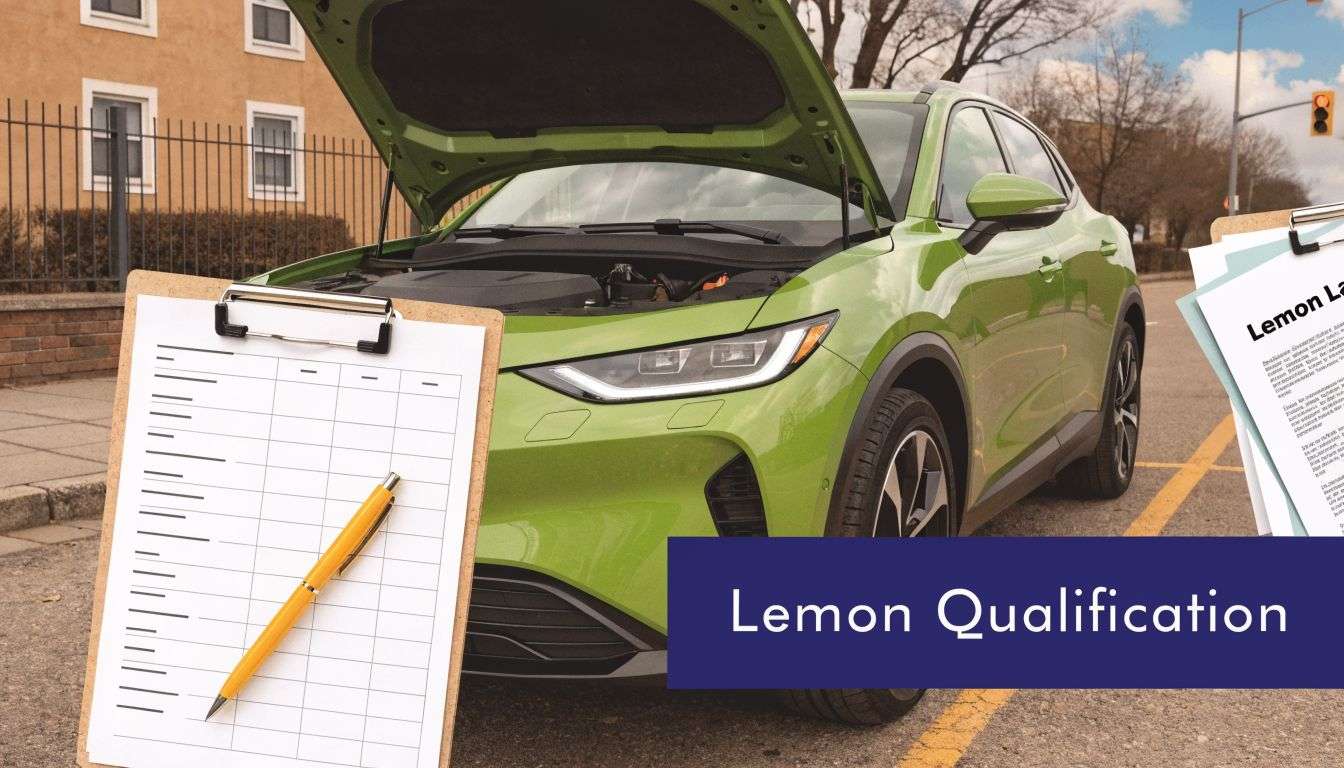
The good news is that Florida doesn’t leave this completely vague. There are concrete pathways that can create a presumption that the vehicle is a lemon.
Three Main Ways A Vehicle Can Qualify
Florida recognizes three independent pathways to qualification. One of them is enough if the facts fit.
- Same defect repaired three or more times
If the manufacturer or its authorized repair facility has tried repeatedly to fix the same substantial defect and failed, that can satisfy the standard. - Safety-related defect with 15 or more cumulative days out of service
Safety issues get closer attention because repeated delays on a dangerous condition create obvious risk. - Any defect with 30 or more cumulative days out of service
This is one of the clearest benchmarks in lemon law in florida. The days add up across multiple visits. They do not have to be consecutive. Florida’s third pathway requires 30 or more cumulative days out of service for any defect, and the cumulative-day approach is explained in this Florida consumer guide discussing qualification standards.
That cumulative rule matters more than people realize. Five short visits can be just as important as one long repair stay if the total time reaches the threshold.
For readers dealing with a dangerous or defective product more broadly, there’s a useful overview of Florida product liability claims, which can help frame how defect evidence is built even outside the lemon law setting.
What Consumers Miss Most Often
Owners tend to overlook three recurring issues.
First, they don’t count days correctly. If the car sits at the dealer waiting for parts, that time may still matter. If it goes in and out of service across several visits, those days can still accumulate.
Second, they allow the service writer to soften the complaint. If you report “vehicle stalls in traffic,” but the repair order says “check engine light on,” the paperwork may understate the actual problem. That makes later proof harder.
Third, they treat different symptoms as unrelated when they may reflect the same defect. Transmission hesitation, harsh shifting, and delayed engagement may be recorded differently across visits even though the owner is complaining about the same core issue.
Keep your descriptions consistent. If the same problem keeps happening, describe it the same way each time unless the symptoms truly changed.
A qualifying case usually looks organized on paper. The records show repetition, time out of service, or both. A weak case usually has missing invoices, vague complaints, and inconsistent repair descriptions. The car may still be defective, but proving it becomes harder.
Your Step By Step Action Plan For A Lemon Law Claim
Once you suspect your vehicle may qualify, the goal changes. You’re no longer just trying to get the car fixed. You’re building a record that protects your rights and gives the manufacturer fewer ways to dispute what happened.
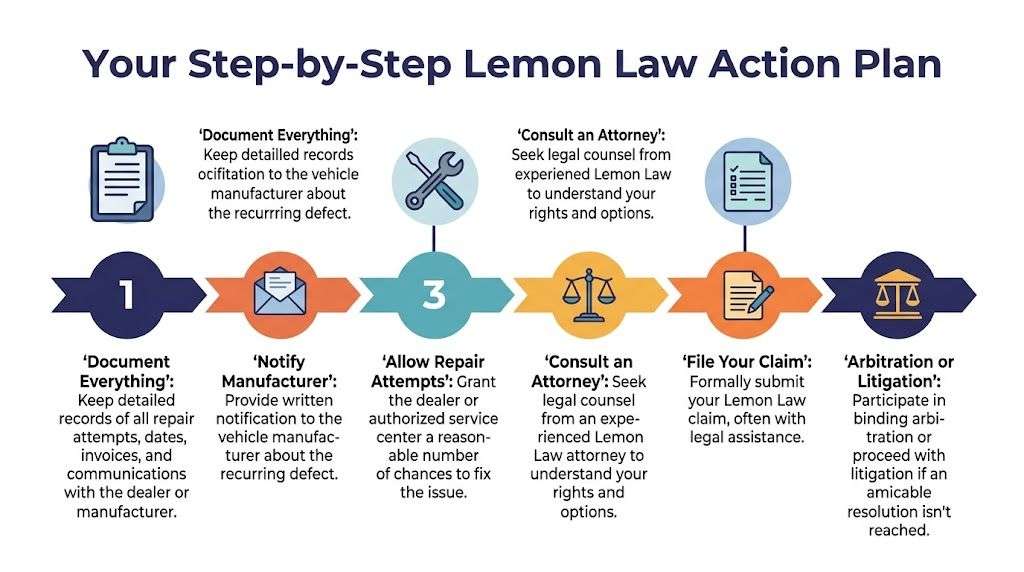
Build The File Before You Build The Claim
Start with your documents. Not later. Now.
A practical file should include:
- The purchase or lease papers
Keep the agreement, warranty booklet, registration, and finance records together. - Every repair order
Don’t settle for a vague summary. Review it before you leave and make sure the concern is stated clearly. - A timeline you create yourself
Use your phone notes, a spreadsheet, or a paper folder. Track dates, mileage, symptoms, warning lights, tow events, and time in the shop. - Communications with the dealer and manufacturer
Save emails, texts, voicemail screenshots, and letters.
If you’re also dealing with repair disputes and insurance-related vehicle issues, this page on handling vehicle damage claims is a useful companion because it focuses on preserving proof and dealing with paper trails.
The Final Notice Step Matters
One of the most important steps in lemon law in florida is formal written notice to the manufacturer. This is where many owners slip. They assume repeated visits to the dealership are enough. Often, they aren’t.
After written notice, the manufacturer gets a short final window to act. After the consumer gives written notification, the manufacturer has 10 days to direct the consumer to a reasonably accessible repair facility, and once the vehicle is delivered, another 10 days to complete the repair, with 45 days for an RV, according to the Florida Attorney General’s explanation of how the process works.
Your notice should be clear and plain. Include:
- Your name and contact information
- Vehicle information, including make, model, and VIN
- A short description of the recurring defect
- A summary of repair history
- A statement that you are giving the manufacturer a final opportunity to repair
Send it in a way that creates proof of delivery.
If you can’t prove the manufacturer received your notice, you may end up arguing about procedure instead of the defect.
Arbitration Or Litigation
Many Florida lemon law cases move through arbitration before anyone talks seriously about court. That doesn’t mean arbitration is casual. It rewards organized records and punishes sloppy timelines.
Arbitration tends to work best when:
- The repair history is clean
- The defect description is consistent
- The owner met deadlines
- The manufacturer missed the final repair opportunity or failed to fix the problem
Litigation becomes more relevant when the manufacturer disputes qualification, challenges the paperwork, or takes an unreasonable position on remedy. From a strategy standpoint, the best cases are built as if they may need either route. That means organized documents, realistic expectations, and a timeline that makes sense from day one.
Understanding Your Remedies Repurchase Or Replacement
If your claim succeeds, the conversation turns from proof to outcome. Most clients care about one thing at that point: how they get out of the vehicle and what that exit will look like in practice.
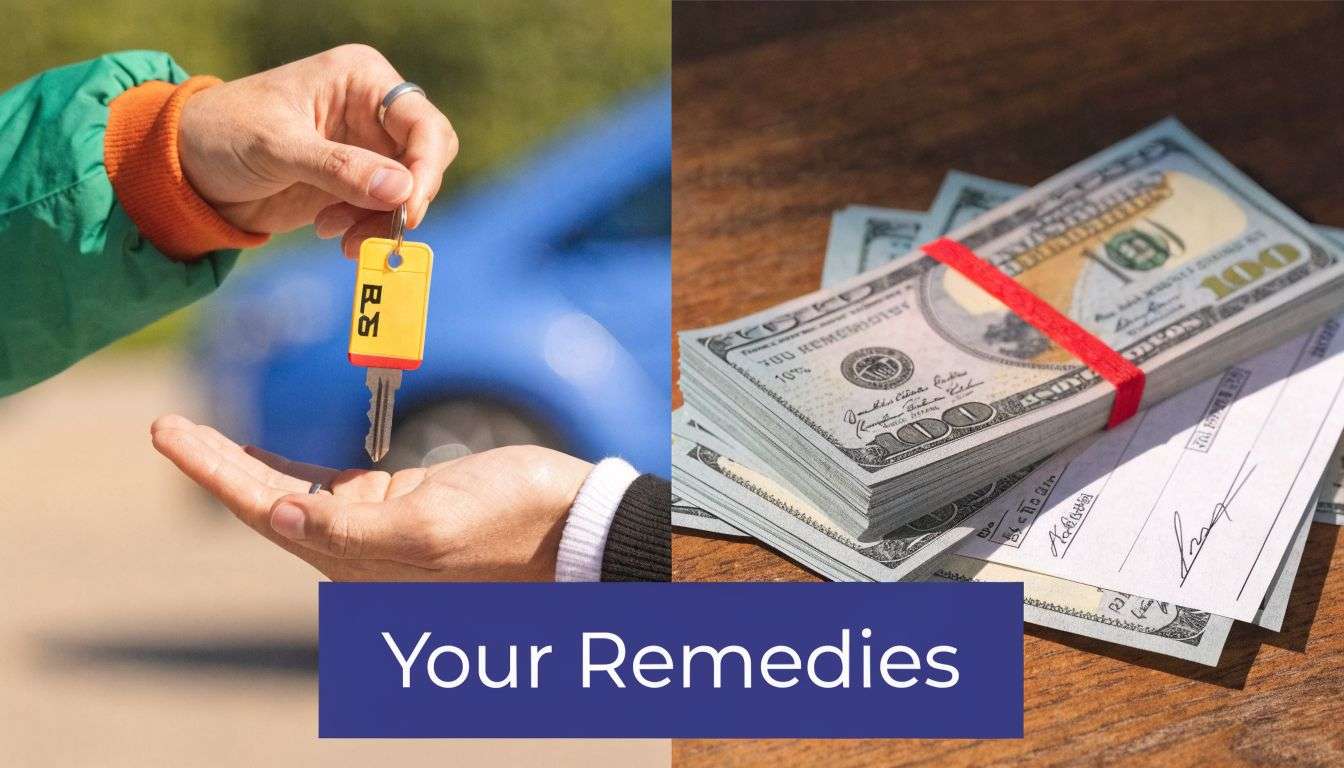
The two headline remedies are repurchase and replacement. Each has advantages. Neither is automatically better for every driver.
Repurchase Usually Means A Clean Exit
A repurchase is often what people mean when they say “buyback.” The manufacturer takes the vehicle back and refunds the amounts required under the process, typically with an offset for the consumer’s use of the vehicle.
From a practical standpoint, repurchase is often the better fit when:
- You’ve lost confidence in the brand
- The same model now makes you uneasy
- The repair history has been long and disruptive
- You’d rather choose a different vehicle altogether
This route usually offers a cleaner emotional result too. Many consumers want out. They don’t want another version of the same car. They want to reset.
If you’re weighing what a recovery looks like more generally, this overview of how lawyers are paid from settlements can help you understand the broader settlement framework, although lemon law fee issues often follow their own rules.
Replacement Can Work For The Right Driver
A replacement vehicle can make sense if your issue feels model-specific rather than brand-ending. Some consumers still like the manufacturer, still want the same features, and just want the defect behind them.
Replacement tends to work best when:
- You liked the vehicle aside from the defect
- Comparable inventory is available
- You want continuity rather than starting over
- Your financing and practical needs favor a swap
The trade-off is psychological as much as legal. Some people are comfortable taking a comparable new vehicle. Others won’t trust the manufacturer again, even if the replacement is perfectly sound.
A good remedy is the one that solves the client’s real problem, not just the paperwork problem.
There is also a practical timing point. Once a settlement is signed, consumers generally want to know when the money or replacement process will take place. Predictability matters. A legal win doesn’t feel complete until the transaction is finished and the client has moved on.
When To Contact A Florida Lemon Law Attorney
Some owners wait too long because they assume calling a lawyer means the process has become hostile. In reality, the best time to get legal guidance is often before the claim becomes messy.
An attorney is especially useful when the facts are good but the paper trail needs help, when the manufacturer is minimizing the issue, or when deadlines are approaching and you don’t want to guess. Early guidance can keep a strong claim from turning into a preventable fight about timing or procedure.
Good Timing Makes A Better Case
Consider reaching out when any of these are true:
- The same defect keeps coming back
- Your vehicle has spent significant time in the shop
- You’re preparing written notice to the manufacturer
- The dealer says the issue is fixed, but it keeps returning
- You’re being pushed into a resolution that feels rushed or one-sided
Lawyers add the most value where the claim involves judgment calls. For example, is the defect the same issue across multiple visits? Does the paperwork support that reading? Is arbitration likely to help, or is the manufacturer setting up a denial?
Those are strategy questions, not just legal questions.
What To Bring To A Consultation
A productive consultation usually starts with a simple file, not a long speech. Bring or send:
- Purchase or lease documents
- Warranty information
- All repair orders and service invoices
- Your notes about the defect timeline
- Manufacturer notices or responses
- Photos or videos if they help show the issue
You should also be ready to explain the problem in one clean sentence. For example: “The vehicle has a recurring transmission hesitation and hard shift issue that has not been fixed after repeated warranty repairs.”
If you’re ready to talk to a lawyer directly, you can schedule a consultation with a Florida attorney.
The biggest advantage of legal help is often organization. A lawyer can see quickly whether the claim is strong, weak, early, late, or salvageable with better documentation. That can save time, frustration, and unnecessary missteps.
Frequently Asked Questions About Florida’s Lemon Law
Does Florida Lemon Law Apply To Used Cars
Sometimes, yes. One of the most misunderstood parts of lemon law in florida is that rights can still matter for a later owner if the timing fits. Florida Bar materials state that the lemon law rights period “is not terminated by the sale to a subsequent purchaser” if defects manifest and are reported within the first 24 months from first delivery, and the same Florida-based resource notes a 25% increase in 2025 disputes involving EV battery and software nonconformities, discussed in this Florida Bar consumer explanation.
That means a used buyer may still have rights if the vehicle is still within the relevant window tied to first delivery and the defect falls within the proper timeframe. The hard part is proof. Used-car cases often rise or fall on service records, warranty documents, and whether the defect can be traced clearly enough.
Do EV Battery And Software Problems Count
They can. A modern vehicle defect isn’t limited to a mechanical failure. Battery systems, charging-related faults, and software problems may qualify if they substantially impair use, value, or safety and fit the rest of the lemon law framework.
That issue is becoming more common in practice because newer vehicles rely heavily on integrated software systems. A screen glitch may be minor. A software-related failure affecting drivability, charging, or safety functions is a different matter.
For owners also thinking about resale consequences, this guide to diminished value claims in Florida may be helpful when a defect or vehicle history affects what the car is worth.
What If The Selling Dealership Closed
That usually doesn’t end the claim. Lemon law responsibility generally focuses on the manufacturer, not on whether the original selling dealership is still open. Repairs may still be documented through authorized service centers, and the key issue remains whether the manufacturer had a fair opportunity to repair the defect and failed.
The practical problem is usually records, not legal impossibility. If the original dealer is gone, gather every invoice you still have, request service histories from any authorized repair facility that handled the vehicle, and keep your own timeline tight and consistent.
If you’re unsure where your case stands, get the documents together first. A clean file answers most of the important questions quickly.
If your vehicle has been back to the shop again and again, a clear game plan matters. Oldham Law PLLC helps Florida clients evaluate complicated disputes with a practical, local approach focused on documentation, deadlines, and cost-effective strategy. If you want direct guidance from a Florida law firm that values clear communication and real-world solutions, reach out to discuss your situation.
