
Commercial Real Estate Legal Issues in Florida: 2026 Guide

TL;DR:
- Florida commercial real estate deals face ten common legal risks, including lease defaults, title defects, and zoning noncompliance. Buyers and tenants should conduct immediate due diligence, such as title searches and environmental screening, before signing contracts and consult a Florida attorney to mitigate potential liabilities. Proper negotiation of lease clauses and thorough investigation help prevent costly disputes and delays in transactions.
Florida commercial real estate transactions carry ten recurring legal risks that can derail a deal, trigger litigation, or expose you to unexpected liability: lease defaults and rent disputes, title defects and undisclosed liens, zoning and land-use noncompliance, environmental hazards, construction defects and mechanics’ liens, disclosure rules under caveat emptor (with statutory exceptions like Florida Statute § 689.25), boundary and survey disputes, insurance gaps tied to flood and hurricane exposure, municipal special assessments, and breach of contract. The immediate next steps are clear: order a title search, ALTA survey, and Phase I environmental screen as soon as you have an accepted contract, and contact a Florida commercial real estate attorney before you sign anything binding.
- Lease defaults and rent disputes — the most common trigger for commercial litigation in Florida
- Title defects and undisclosed liens — can surface at closing and halt a transaction entirely
- Zoning and land-use noncompliance — recent changes under the Live Local Act affect permitted uses statewide
- Environmental hazards — contamination, sinkholes, and flood history carry disclosure and remediation obligations
- Construction defects and mechanics’ liens — subcontractor claims can cloud title long after a project closes
- Disclosure rules — Florida’s caveat emptor doctrine applies to commercial property; Johnson v. Davis protections do not automatically extend to commercial buyers
- Boundary and survey disputes — easement conflicts routinely escalate to litigation
- Insurance gaps — flood and hurricane coverage shortfalls are a persistent Florida-specific risk
- Municipal special assessments — passive liabilities under Florida Statutes Chapter 170 that can shift to a buyer at closing
- Breach of contract — ambiguous terms and missed deliverables drive a significant share of commercial property disputes
Oldham Law PLLC serves buyers, sellers, landlords, and tenants across Pinellas County and Tampa Bay on all of these issues.
What are the most common commercial real estate legal issues in Florida?
Florida’s commercial real estate market produces a predictable set of legal problems, and knowing them in advance is the clearest form of protection you have.
Breach of contract is the broadest category. Ambiguous contract terms, missed deliverables, and unclear payment structures generate disputes that could have been avoided with tighter drafting. Florida courts enforce clear contract language strictly and rarely rewrite deal terms after the fact, so what you sign is what you live with.
Lease defaults and rent disputes follow closely. A tenant who stops paying rent, disputes CAM charges, or vacates early forces the landlord into a statutory notice process and potentially months of litigation. Landlords who skip proper notice procedures face delays and potential liability.

Title defects and undisclosed liens are a closing-day trap. Recorded judgments, unpaid contractor invoices, or IRS tax liens attached to a property can surface during a title search and halt a transaction. Mechanics’ liens from prior construction work are especially common in Florida and can cloud title without the current owner’s knowledge.
Zoning and land-use noncompliance has grown more complex since the Live Local Act reshaped permitted uses for certain parcels, particularly those near transit corridors and urban centers. A buyer who assumes a property’s current use is legally conforming without confirming it in writing takes on real risk.
Environmental hazards deserve their own line. Florida’s geology produces sinkholes; its coastal and low-lying areas carry flood history; and older commercial sites may have contamination from prior industrial use. Recent legislative changes, including Senate Bill 1020, have expanded flood disclosure obligations and made environmental due diligence a non-negotiable step.
Disclosure law differences are where Florida commercial deals diverge sharply from residential ones. Under the caveat emptor doctrine, sellers of commercial property are generally not required to disclose latent defects. Johnson v. Davis established affirmative disclosure duties for residential sellers, but Florida courts have declined to extend that duty to commercial transactions. Active concealment or affirmative misrepresentation can still create liability, and Florida Statute § 689.25 carves out specific statutory exceptions.
Boundary and survey disputes arise when legal descriptions in deeds do not match physical conditions on the ground. Easement conflicts, encroachments, and shared-access disputes can tie up a property for years.
Insurance gaps are a Florida-specific hazard. Standard commercial property policies often exclude flood damage, and hurricane-related coverage disputes are common after major storm events. Lenders typically require flood insurance for properties in FEMA-designated flood zones, but coverage adequacy is a separate question.
Municipal special assessments under Florida Statutes Chapter 170 can produce unexpected costs for buyers who do not check for pending or recently levied assessments before closing. Unless the purchase contract assigns responsibility clearly, the assessment can shift to the buyer after the deed records.
Construction defects and mechanics’ liens round out the list. Subcontractors and suppliers who go unpaid can record a lien against the property, and those liens survive a sale if not properly released.
Statistic callout: Florida commercial lease disputes often take several months to over a year when litigated, with most cases resolving at mediation rather than trial.
Which commercial lease clauses cause the most disputes in Florida?
Commercial leases are negotiated documents between sophisticated parties, and Florida courts hold both sides to what they signed. That means the language you accept at signing is the language a judge will enforce later, with little sympathy for terms that turned out to be unfavorable.
High-stakes clauses to audit before you sign:
- Rent escalation and CAM charges — Common Area Maintenance charges are a frequent battleground. Leases that allow landlords to include management fees, capital improvements, or uncapped administrative costs in CAM reconciliations can produce annual bills far above what a tenant budgeted.
- Maintenance and repair allocation — Who fixes the HVAC? Who replaces the roof? Ambiguous language here produces some of the most expensive disputes in commercial tenancy.
- Assignment and subletting — Consent requirements that give a landlord absolute discretion to deny an assignment can trap a tenant in a space they can no longer use and block a business sale.
- Personal guaranties — A guaranty that covers the full lease term with no carve-outs exposes a business owner’s personal assets to the entire remaining rent obligation if the business fails.
- Default and remedy provisions — Cure periods, notice requirements, and landlord remedy rights vary widely. Short cure periods with no notice requirement can accelerate a default before a tenant has a chance to respond.
- Early termination penalties — Flat-fee termination clauses can equal months or years of remaining rent. Negotiate a cap or a declining schedule tied to how much of the lease term remains.
- Indemnity and insurance obligations — Broad indemnity language can shift liability for third-party claims to the tenant even when the landlord’s negligence contributed.
Florida’s commercial landlord-tenant law (Chapter 83, Part I of the Florida Statutes) governs the relationship, but it provides far fewer tenant protections than the residential counterpart. There is no implied warranty of habitability in commercial leases. Self-help evictions are prohibited; a landlord who changes locks or removes tenant property without a court order risks substantial liability. For nonpayment of rent, the statutory process begins with a three-day written notice, and defective service restarts the clock entirely. If you want to understand the full eviction timeline, the Florida eviction process involves more steps than most landlords anticipate.
Leases also hide obligations that affect resale or financing. Assignment restrictions can prevent a buyer of the business from assuming the lease. Environmental indemnities buried in the lease can make a tenant responsible for cleanup costs that predate their tenancy.
Pro Tip: Limit personal guaranty scope to 12–24 months of base rent rather than the full lease term, and cap CAM charge categories in writing. These two negotiating points reduce your worst-case exposure more than almost any other lease revision.
What does Florida due diligence look like for a commercial purchase?
Florida’s caveat emptor rule places the burden of discovery squarely on the buyer in commercial transactions. Unlike residential sales, where Johnson v. Davis requires sellers to disclose known material defects, commercial sellers generally have no affirmative duty to volunteer information about latent problems. Statutory exceptions exist, including building code violations under Florida Statute § 689.25, and active concealment or misrepresentation can still create seller liability. But the practical lesson is this: if you do not ask and investigate, you may not have a legal remedy after closing. For a deeper look at what happens when a seller stays silent, see property disclosure disputes.
Recent legislative changes have added new layers. The Live Local Act altered permitted land uses for certain commercial and mixed-use parcels. Senate Bill 1020 expanded flood disclosure requirements, and Florida’s FD-1 flood disclosure form now requires sellers to provide specific flood-claim and damage history. Flood history is a routine due-diligence item in 2026, not an optional one.
Florida commercial due-diligence checklist with recommended timing:
| Due Diligence Item | Recommended Timing | Responsible Party |
|---|---|---|
| Title search and title commitment | Within 5 days of contract execution | Buyer’s counsel / title agent |
| ALTA survey | Within 5–7 days of contract execution | Buyer (survey company) |
| Phase I environmental screen | Within 10 days of contract execution | Buyer (environmental consultant) |
| Zoning/land-use confirmation letter | Within 10 days | Buyer’s counsel |
| Building permit history and code compliance | Within 14 days | Buyer’s counsel |
| Flood disclosure review (FD-1 / SB 1020) | At contract execution | Buyer and buyer’s counsel |
| Certificate of occupancy confirmation | Within 14 days | Buyer’s counsel |
| Utility and special assessment review | Within 14 days | Buyer’s counsel |
| Title insurance commitment and endorsements | Before closing | Buyer (lender may require) |
Title insurance protects against defects that a search might miss, including forged deeds, undisclosed heirs, and recording errors. Endorsements for zoning, survey matters, and environmental liens add meaningful protection for commercial buyers and are worth the additional premium. For a breakdown of who typically pays what, the commercial closing costs guide covers Florida-specific allocation practices.
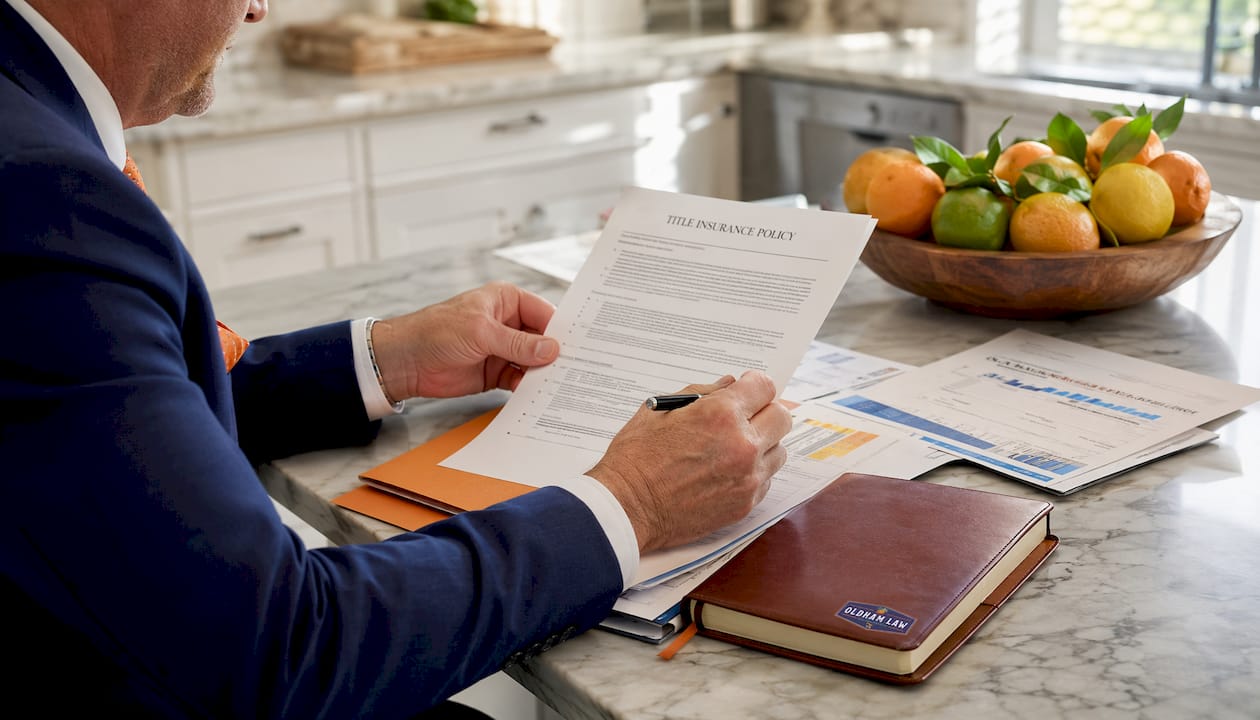
Pro Tip: Order the title search and ALTA survey the same day you get an accepted contract. Survey issues and title exceptions take time to resolve, and discovering them late in the due-diligence period leaves you with little leverage to renegotiate or exit the deal cleanly.
How do construction disputes and mechanics’ liens work in Florida?
Construction-phase legal problems are among the most disruptive in commercial real estate because they can cloud title, delay financing, and generate parallel disputes between owners, general contractors, and subcontractors simultaneously.
A Florida mechanics’ lien is a statutory claim recorded against real property by a contractor, subcontractor, laborer, or material supplier who has not been paid for work or materials provided to improve that property. The lien attaches to the property itself, not just to the party who ordered the work, which means an owner can face a lien for a subcontractor the owner never directly hired or paid.
- Who can file: General contractors, subcontractors, sub-subcontractors, laborers, and material suppliers all have lien rights under Florida’s construction lien law.
- Common triggers: Nonpayment for completed work, disputed change orders, contractor insolvency mid-project, and disputes over substantial completion.
- Typical contractor dispute causes: Defective or incomplete work, delayed completion, differing site conditions discovered after groundbreaking, and unpaid change orders that were never formally approved in writing.
- Owner protections: Require a Notice of Commencement to be recorded before work begins. Collect conditional lien waivers from the general contractor and all major subcontractors with each payment. Require a performance bond and a payment bond on larger projects; a payment bond protects the owner from subcontractor claims even when the GC has been paid.
- After a lien is recorded: Retain counsel immediately. Verify all payment records and subcontractor contracts. A recorded lien must be enforced within one year or it expires, but an unresolved lien will block a sale or refinancing in the meantime.
- Pay-when-paid clauses: Review these carefully. Florida courts have enforced them as conditions precedent to payment in some circumstances, which can delay subcontractor payments and increase lien risk on a project.
The Florida Realtors lien law resource provides a useful overview of the statutory framework for owners and developers navigating an active lien claim.
How are commercial real estate disputes resolved in Florida?
Most commercial real estate disputes in Florida settle before trial. Mediation and negotiation resolve the majority of cases, but when a matter proceeds to litigation, you should plan for a timeline of 6–18+ months from filing to resolution.
Typical Florida dispute timeline:
| Phase | Estimated Duration |
|---|---|
| Pre-suit demand and response | 1–14 days |
| Filing and service of process | 2–4 weeks |
| Discovery (documents, depositions) | 2–6 months |
| Court-mandated mediation | 4–8 months after filing |
| Trial (if mediation fails) | 12–18+ months after filing |
When to involve counsel and ADR practitioners:
- As soon as a dispute is foreseeable, not after a lawsuit is filed. Early counsel involvement protects your communications and preserves options.
- Before sending a formal demand letter. The tone and content of a demand can affect your negotiating position and, in some cases, trigger contractual cure periods.
- When a lease default notice arrives. Defective notice is a defense; an attorney can identify procedural errors quickly.
- When a mechanics’ lien is recorded. You have a limited window to respond effectively.
- When the other side retains counsel. Representing yourself against experienced commercial litigation counsel is a significant disadvantage.
Cost drivers in Florida commercial litigation include claim size, discovery volume, the need for expert witnesses (appraisers, environmental consultants, construction experts), and whether the contract contains a prevailing-party attorney-fee clause. Florida’s proposal for settlement mechanism can shift attorney fees to the losing party in certain circumstances, which affects settlement dynamics significantly. Understanding Florida’s proposal for settlement rules is worth a conversation with counsel before you make or reject a settlement offer.
If an escrow dispute arises during or after a transaction, the resolution path has its own procedural requirements. The escrow dispute process in Florida follows specific statutory steps that differ from standard contract litigation.
Pro Tip: If preserving a business relationship matters, propose mediation before filing suit. Courts in Florida require mediation in most civil cases anyway, so initiating it early saves time, reduces costs, and keeps the conversation private.
A practical checklist to reduce legal risk in Florida commercial real estate
Timing matters as much as the steps themselves. Here is a phase-by-phase sequence you can follow on any Florida commercial transaction or lease.
- Pre-contract: Confirm financing terms and pre-qualify for any required lender approvals. Run a preliminary title check to identify obvious encumbrances. Confirm zoning and permitted use with the local municipality before signing. Include contingencies in the contract tied to each major due-diligence deliverable.
- Due diligence (days 1–14 after contract): Order the ALTA survey and title commitment simultaneously. Commission a Phase I environmental assessment. Pull the building permit history and confirm the certificate of occupancy. Review flood disclosure forms and check FEMA flood zone maps. Confirm whether any municipal special assessments are pending or recently levied under Florida Statutes Chapter 170.
- Contract negotiation: Allocate responsibility for existing liens and pending assessments in writing. Define indemnity scope narrowly. Clarify guaranty terms and assignment rights. Include a cure/notice provision with reasonable timeframes and an attorney-fee clause that applies to both parties.
- Pre-closing: Confirm that all title exceptions identified in the commitment have been cleared or insured over. Order required endorsements. Confirm recording of all required documents and establish escrow holds for any unresolved matters.
- Post-closing: File all documents required by statute and maintain copies. Monitor for new municipal assessments or special district levies. Confirm that property insurance, flood insurance, and tax payments are current. For leases, set calendar reminders for CAM reconciliation deadlines and lease renewal notice windows.
Standardizing these steps across a portfolio reduces recurring legal exposure significantly. Property management legal pitfalls most often trace back to inconsistent documentation and missed compliance deadlines, not to unusual or unforeseeable events.
How Oldham Law PLLC helps Florida clients with commercial real estate matters
Oldham Law PLLC is a Pinellas Park-based firm serving clients throughout Pinellas County, St. Petersburg, and the broader Tampa Bay area. The attorneys bring prior experience as prosecutors and insurance defense lawyers, which means they approach commercial real estate matters from multiple angles: they understand how disputes are litigated, how insurers evaluate claims, and how to structure deals to minimize the risk of either.
Typical scope of work in commercial real estate matters:
- Contract drafting and negotiation for purchases, sales, and leases
- Title review, closing support, and title insurance coordination
- Dispute resolution and real estate litigation in Pinellas County and Tampa Bay courts
- Commercial eviction proceedings and lease enforcement
- Mechanics’ lien defense and enforcement
- Zoning and land-use compliance counseling
- Business formation and entity structuring tied to real estate acquisitions
When you engage Oldham Law PLLC, the initial process typically includes a document review of your contract, lease, or title commitment, followed by a prioritized risk memo identifying the issues that need immediate attention. The firm offers flat-fee, hourly, and, where applicable, contingency fee structures depending on the nature of the matter. Florida real estate contract law is a core practice area, and the firm’s local court familiarity is a practical advantage in a market where procedural knowledge matters.
Key Takeaways
Florida commercial real estate buyers, sellers, landlords, and tenants face ten recurring legal risks, and the single most effective protection is ordering title, survey, and environmental due diligence immediately after contract execution while retaining a Florida attorney before signing.
| Point | Details |
|---|---|
| Caveat emptor applies to commercial deals | Florida sellers have no general duty to disclose latent defects; buyers must investigate or lose the right to complain later. |
| Order due diligence on day one | Title search, ALTA survey, and Phase I environmental screen should be commissioned within days of an accepted contract. |
| Lease guaranties and CAM terms carry the most risk | Limit personal guaranty scope and cap CAM categories in writing before signing any commercial lease. |
| Disputes take 6–18+ months when litigated | Start mediation early to preserve relationships and control costs; most Florida commercial disputes settle before trial. |
| Oldham Law PLLC serves Pinellas County and Tampa Bay | The firm handles commercial real estate transactions, lease disputes, litigation, and closings for clients across the Tampa Bay area. |
What most people get wrong about commercial real estate risk in Florida
The conventional wisdom says that sophisticated buyers and tenants protect themselves. Florida courts say the same thing, which is exactly why the conventional wisdom is dangerous.
The assumption that “sophisticated party” status protects you cuts both ways. Yes, it means courts will enforce the contract you signed. It also means courts will hold you to the caveat emptor standard even when a seller knew about a problem and said nothing, as long as the seller did not actively conceal it or make an affirmative misrepresentation. The gap between “knew and stayed silent” and “actively concealed” is narrower than most buyers realize, and it is litigated constantly in Florida appellate courts.
The other underestimated risk is timing. Most of the legal exposure in a commercial deal is locked in during the first two weeks after contract execution, when due-diligence items are ordered (or not). A buyer who waits until day 25 of a 30-day inspection period to order a Phase I environmental screen has almost no leverage to renegotiate or exit if contamination turns up. The same logic applies to lease negotiations: the time to push back on a personal guaranty is before you sign, not after the business hits a rough quarter.
The practical takeaway is not to avoid commercial real estate. It is to treat the legal work as the deal itself, not as paperwork that follows the deal. The clients who avoid litigation are almost always the ones who invested in thorough due diligence and clear contract language upfront, not the ones who moved fast and hoped for the best.
Ready to protect your Florida commercial real estate investment?
Facing a lease dispute, a title problem, or a transaction that needs careful legal review? Oldham Law PLLC gives Florida businesses a direct line to experienced commercial real estate counsel in Pinellas County and Tampa Bay, without the overhead of a large firm and without the guesswork about fees.
The firm handles the full range of commercial real estate matters: contract drafting, title and closing support, lease negotiation and enforcement, mechanics’ lien defense, and litigation when it comes to that. Fee structures are straightforward: flat-fee for defined transactional work, hourly for complex matters, and the firm will tell you which applies before you commit. Before your consultation, gather your lease or purchase contract, any title commitment or survey you have received, inspection or environmental reports, and any correspondence related to the dispute or transaction.
To schedule a consultation with Oldham Law PLLC, visit oldfllaw.com or reach out through the firm’s contact page. If you need a local real estate attorney in St. Petersburg or Pinellas Park, the firm’s local real estate practice page has contact details and directions.
This article is general legal information, not legal advice. Consult a qualified Florida attorney for guidance specific to your situation.
Useful Florida sources and further reading
- Florida Statute § 689.25 — Statutory disclosure exceptions for commercial property, including building code violations; the primary carve-out from caveat emptor for Florida commercial sellers.
- Johnson v. Davis — The Florida Supreme Court case establishing affirmative disclosure duties for residential sellers; cited as the contrasting authority that does not extend to commercial transactions under current Florida law.
- Live Local Act and SB 1020 — Recent Florida legislative changes affecting land-use permissions and flood disclosure obligations; essential reading for any buyer or developer evaluating a commercial parcel.
- Florida commercial lien law overview — Florida Realtors’ primer on mechanics’ lien rights, deadlines, and procedures for owners and contractors.
- Florida Statutes Chapter 680, § 680.501 — The Florida Uniform Commercial Code lease default and remedy provisions; governs rights and remedies when a party is in default under a lease contract.
- Easement law overview — Cornell Law School’s plain-language explanation of easements; useful background for boundary and access disputes.
- Oldham Law PLLC — Florida real estate contract law — The firm’s detailed resource on Florida contract law for real estate transactions, including statutory timelines and buyer/seller obligations.
FAQ
What is the caveat emptor rule in Florida commercial real estate?
Caveat emptor means “buyer beware.” In Florida, sellers of commercial property generally have no legal duty to disclose latent defects, so buyers must conduct thorough due diligence before closing or risk losing any remedy after the fact.
What are common examples of commercial real estate disputes in Florida?
Common disputes include lease defaults and unpaid rent, title defects and undisclosed liens, zoning noncompliance, construction defect and mechanics’ lien claims, and breach of purchase contract due to ambiguous terms or missed deliverables.
How long does a Florida commercial real estate dispute typically take to resolve?
When litigated, Florida commercial real estate disputes typically take many months to resolve, moving through pre-suit demand, filing, discovery, and court-mandated mediation before reaching a settlement or trial.
What legal issues do property managers face most often in Florida?
Property managers most often encounter inconsistent lease documentation, failure to follow statutory notice procedures for evictions, improper handling of CAM reconciliations, and missed compliance deadlines that expose the portfolio to recurring legal liability.
Does Florida’s seven-year boundary rule apply to commercial property?
Florida does not have a specific “seven-year boundary rule” as a standalone statute; boundary and adverse possession claims in Florida are governed by Florida Statutes Chapter 95. Commercial property owners should obtain an ALTA survey and consult a Florida real estate attorney to confirm boundary lines and identify any potential adverse possession exposure before closing.
