
As Is Clause in Florida Real Estate: 2026 Guide

TL;DR:
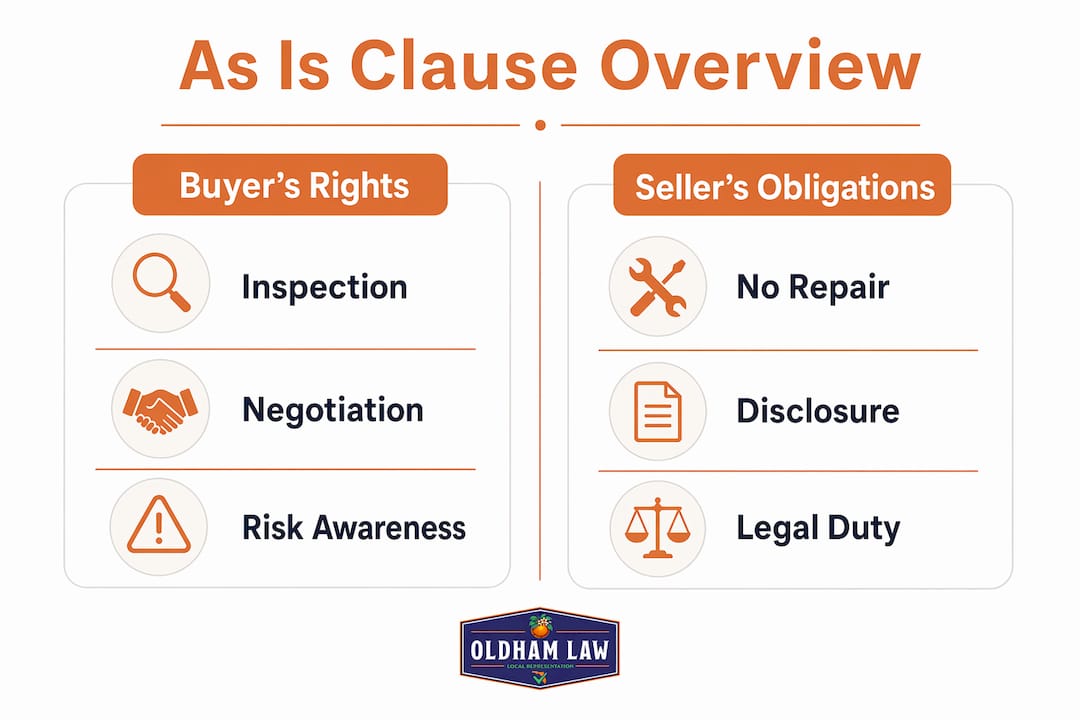
- An as is clause states that a property is sold in its current condition without the seller’s repair obligations. However, sellers still must disclose known material defects and cannot hide problems, even in an as is sale. Buyers retain inspection rights and can negotiate credits or cancellation within a designated due diligence period.
An as is clause is a contractual provision stating that a property is sold in its current condition, with no obligation on the seller’s part to make repairs. Florida buyers and sellers encounter this language in the majority of residential transactions today, yet most misunderstand what it actually does and does not cover. The clause does not eliminate seller disclosure duties, and it does not strip buyers of their right to inspect or negotiate. Knowing the difference between what the clause waives and what it preserves is the most important thing you can take from any real estate contract review.
What does an as is clause actually mean in a contract?

An as is clause means the seller will not fix anything before closing. The buyer agrees to accept the property in whatever condition it is in at the time of sale. That sounds final, but Florida law adds a critical layer: sellers must still disclose known material defects that a buyer cannot easily see.
The 1985 Florida Supreme Court ruling in Johnson v. Davis established this duty. That case held that sellers must reveal known facts that materially affect the value of a property and are not readily observable by the buyer. This ruling overrode the old caveat emptor doctrine, which placed the entire burden of discovery on the buyer.
The as is condition, then, is not a license to hide problems. It is simply a release from the repair obligation. Those are two separate things, and confusing them creates real legal risk for sellers and real financial harm for buyers.
How does an as is clause change buyer inspection and negotiation rights?
The as is purchase agreement does not eliminate your right to inspect. Florida contracts typically include a due diligence period of 10–15 days during which you can hire inspectors, review documents, and evaluate the property fully. If you are not satisfied with what you find, you can cancel the contract and receive your full deposit back, no questions asked.
That cancellation right is your most powerful tool. Sellers know you can walk away, and that knowledge creates real negotiating leverage even inside an as is agreement. Here is how buyers typically use the inspection period:
- Order a general home inspection to identify structural, mechanical, and safety issues.
- Add specialty inspections for roof condition, mold, termites, and foundation if the general inspector flags concerns.
- Review the seller’s disclosure documents and compare them against inspection findings.
- Request a price reduction or closing credit based on the cost of repairs identified during inspection.
- Cancel the contract if the seller refuses any concession and the defects are significant enough to change your decision.
Sellers have no obligation to agree to credits or price reductions under an as is sale contract. However, negotiations via credits and price adjustments happen regularly because sellers want to close. The threat of cancellation is the buyer’s leverage, and it is real.
Pro Tip: Never skip the inspection on an as is contract. Buyers who waive inspections to speed up closing lose their right to cancel based on condition and give up all negotiating power.
What are the seller’s disclosure obligations under an as is clause?
Sellers in Florida carry disclosure duties that the as is agreement cannot erase. The duty to disclose known latent defects is a binding common-law obligation rooted in Johnson v. Davis. A latent defect is one that is not visible or obvious during a normal walkthrough. Examples include a history of roof leaks, a known sinkhole risk, prior flooding, or a failing septic system hidden beneath the yard.
Florida also imposes specific statutory disclosures that apply regardless of whether the contract is as is or standard. These cover a range of known risks that buyers have a legal right to know about before closing.
| Disclosure Category | Required Under Florida Law | Waived by As Is Clause? |
|---|---|---|
| Known material latent defects | Yes, per Johnson v. Davis | No |
| Flood damage history | Yes, expanded as of october 2025 | No |
| Radon gas presence | Yes, statutory requirement | No |
| Sinkhole activity | Yes, statutory requirement | No |
| HOA membership and fees | Yes, statutory requirement | No |
| Coastal erosion risk | Yes, statutory requirement | No |
| Repair obligation | No | Yes |
Florida has no mandatory universal disclosure form, but the absence of a form does not eliminate the duty. Sellers who stay silent about known problems face legal action after closing. The as is waiver provision bars post-closing claims for defects the buyer could have discovered, but it does not protect sellers from liability for fraudulent concealment or intentional nondisclosure.
That distinction matters enormously. A buyer who discovers after closing that the seller knew about a hidden mold problem and said nothing has a viable legal claim, even if the contract included an as is clause.
Pro Tip: Sellers should voluntarily document every known defect in writing before listing. A clear paper trail of disclosures is your best protection against post-closing disputes.
Common misconceptions about as is clauses in Florida real estate
Several myths about the as is where is clause circulate among buyers and sellers, and each one leads to costly mistakes. Understanding what the clause actually does prevents those mistakes before they happen.
- Myth: As is means no inspection is allowed. False. The inspection period is a standard contractual right. Buyers in Florida retain full access to the property for inspections during the due diligence window.
- Myth: No negotiation is possible after signing an as is contract. False. Buyers regularly negotiate credits and price reductions after inspections reveal problems. The seller’s refusal to repair does not mean the seller refuses to adjust the price.
- Myth: As is means the seller can stay silent about known problems. False. The Johnson v. Davis duty applies regardless of contract language. Silence about a known material defect is a legal risk, not a safe strategy.
- Myth: The as is clause protects sellers from all post-closing claims. False. Courts consistently rule that the waiver does not cover fraud or intentional nondisclosure. Sellers who hide known defects remain exposed.
- Myth: As is contracts are only used for distressed properties. False. As is agreements are common in standard residential sales throughout Florida, including well-maintained homes where sellers simply prefer not to negotiate repairs.
The practical reality is that an as is agreement shifts the risk of unknown defects to the buyer while leaving the risk of known defects squarely on the seller. That is a nuanced balance, and it requires both parties to understand their rights clearly.
Practical tips for buying or selling with an as is clause
Whether you are on the buying or selling side, a few concrete steps protect your interests and reduce the chance of a dispute after closing.
For buyers:
- Use every day of the inspection period to gather information. Do not rush this window.
- Hire a licensed general inspector and add specialty inspections for any area of concern.
- Get repair cost estimates in writing from licensed contractors. Use those numbers in your credit request.
- If the seller refuses any concession and the defects are serious, cancel before the deadline. Your deposit is protected during the due diligence period.
- Consult a real estate attorney before signing if the property has a complex history, known issues, or unusual contract language.
For sellers:
- Disclose every known material defect in writing before the contract is signed.
- Keep records of all repairs, inspections, and maintenance completed on the property.
- Review Florida’s statutory disclosure requirements for flood, radon, sinkholes, and HOA obligations.
- Understand that an as is clause does not eliminate your legal exposure for things you knew and did not say.
- Work with a real estate attorney to review your disclosure documents before listing.
Pro Tip: Keep a written log of every disclosure conversation and document. If a dispute arises after closing, that paper trail is the difference between a resolved claim and prolonged litigation.
If a seller fails to disclose known issues, buyers have legal recourse even under an as is agreement. Knowing that option exists before you close gives you real protection.
Key Takeaways
An as is clause waives the seller’s repair obligation but never waives the seller’s duty to disclose known material defects under Florida law.
| Point | Details |
|---|---|
| As is waives repairs, not disclosure | Sellers must still reveal known material latent defects per Johnson v. Davis. |
| Inspection rights remain intact | Florida buyers retain a 10–15 day due diligence period to inspect and cancel. |
| Negotiation is still possible | Buyers can request price reductions or credits based on inspection findings. |
| Fraud liability survives the clause | Courts rule the as is waiver does not protect sellers who hide known defects. |
| Statutory disclosures always apply | Flood, radon, sinkhole, and HOA disclosures are required regardless of contract type. |
What we see in practice at Oldham Law PLLC
The biggest problem we see with as is contracts is not the clause itself. It is the misplaced confidence both sides bring to the table. Buyers assume they have no power. Sellers assume they have no liability. Both assumptions are wrong, and both lead to disputes that could have been avoided.
Buyers who skip inspections to compete in a fast market are taking a risk that the clause was never designed to create. The inspection period exists precisely to protect you. Using it fully is not a sign of distrust. It is basic financial self-protection on what is likely the largest purchase of your life.
Sellers who stay quiet about known problems are not protected by the as is language. Florida courts have been consistent on this point for decades. The Johnson v. Davis ruling is not a technicality. It is a foundational principle of Florida real estate law, and it applies to every residential sale in the state.
The negotiation dynamic under an as is agreement is also more active than most people expect. We regularly see buyers and sellers reach credit agreements after inspections, even when the contract says as is. The clause sets the starting point. It does not set the ending point.
Our advice is simple: get informed before you sign, use every right the contract gives you, and talk to an attorney when the stakes are high enough to matter.
— Oldham Law PLLC
Real estate legal guidance from Oldham Law PLLC
Oldham Law PLLC serves buyers and sellers throughout the Tampa Bay area, including St. Petersburg, Pinellas Park, and all of Pinellas County. The firm’s real estate attorneys review as is contracts, advise on disclosure obligations, and represent clients in disputes when sellers conceal known defects.
If you are entering a real estate transaction and want to understand your rights before you sign, Oldham Law PLLC provides focused, personalized counsel without the volume-driven approach of larger firms. The attorneys bring prior experience in insurance defense, which gives them a sharp eye for the kinds of defect and disclosure disputes that arise after closing. Contact Oldham Law PLLC to speak with a Florida real estate attorney who knows this market and will give your situation the attention it deserves.
FAQ
What does an as is clause mean in a Florida real estate contract?
An as is clause means the seller has no contractual obligation to repair defects before closing. The buyer accepts the property in its current condition, but the seller must still disclose known material defects under Florida law.
Can a buyer still negotiate after signing an as is contract?
Yes. Buyers can request credits or price reductions based on inspection findings during the due diligence period. The seller has no repair obligation but often agrees to concessions to keep the deal moving.
Does an as is clause protect sellers from all legal liability?
No. Florida courts rule that the as is waiver does not cover fraudulent concealment or intentional nondisclosure of known defects. Sellers who hide material problems remain legally exposed after closing.
How long is the inspection period in a Florida as is contract?
The standard due diligence period in Florida as is contracts is typically 10–15 days. During this window, buyers can cancel the contract and receive a full deposit refund without penalty.
What defects must Florida sellers disclose even in an as is sale?
Florida sellers must disclose known material latent defects per Johnson v. Davis, plus statutory items including flood damage history, radon gas, sinkhole activity, and HOA membership obligations, regardless of whether the contract is as is.
