
Losing a parent, spouse, or sibling often creates a strange split-screen reality. One part of your day is grief, family calls, funeral arrangements, and sorting through papers. The other part is a sudden flood of legal terms you didn't ask for, including probate, personal representative, creditors, inventories, notices, and court filings.
That's usually when the question becomes urgent: how do i find a good probate attorney without making a rushed decision at a bad time.
The hard part is that probate isn't one single type of case. Some estates move through routine administration with limited conflict. Others involve business interests, real estate in multiple places, unclear records, or family tension that turns ordinary administration into a dispute. Florida guidance for consumers also recognizes that fit matters. The right lawyer depends on whether the estate involves routine administration, complex asset management, or likely litigation, and a lawyer who handles straightforward administration well may not be the right fit for a contested matter, as noted in this Florida attorney-selection guide.
Navigating The Probate Process After A Loss
A common Florida probate situation often begins. A family member dies, someone finds a will in a drawer, and another relative says, “Call a probate lawyer.” But nobody in the room really knows what that means, what documents matter, or whether the estate is simple, contested, or somewhere in between.
That uncertainty is normal.
Many families in Pinellas County and across Tampa Bay don't need a lecture on legal theory in the first week after a loss. They need someone to help them figure out what kind of matter they have. That's the first practical reason your hiring decision matters. You are not just hiring a person to file paperwork. You are choosing someone to assess risk, organize next steps, and help keep the process from getting messier than it needs to be.
If you're still trying to understand the basics, it helps to read a plain-English overview of how probate works in Florida before you start calling lawyers. That way, your first consultation can focus on your family's facts instead of basic vocabulary.
The Attorney You Need Depends On The Estate You Have
A probate case with one home, one bank account, and cooperative beneficiaries calls for one skill set. A case involving a prior marriage, disputed beneficiary expectations, missing records, or closely held business interests calls for another.
That's why broad advice like “find someone experienced” usually isn't enough. You need someone whose background matches your version of probate.
Practical rule: Don't ask only, “Is this person a good lawyer?” Ask, “Is this person good for this estate?”
Grief Makes Speed Feel Urgent
Families often feel pressure to hire the first attorney who returns the call. Sometimes that works out. Sometimes it creates problems later, especially when the lawyer's actual practice is broader than probate and the matter turns out to be more involved than expected.
The better approach is to slow the decision just enough to make a clean assessment. A good probate attorney should help you feel more organized after the first conversation, not more confused.
Where To Begin Your Search For A Florida Probate Attorney
A daughter in St. Petersburg has her mother's death certificate in one hand, a stack of unopened mail in the other, and three different relatives telling her to “call an estate lawyer.” That is usually where the search starts. The problem is that “estate lawyer” is too broad to be useful. In Florida, you want someone who regularly handles probate administration in the county where the case will likely be filed.
A better first step is to search with the court and county in mind. Use terms like “probate attorney Pinellas County Florida,” “probate administration lawyer Clearwater,” or “Tampa probate lawyer for estate administration.” That filters out a lot of lawyers who draft wills but rarely handle the court process after a death. It also helps you find lawyers familiar with the clerks, judges, and filing habits that affect how smoothly a case moves in Pinellas, Hillsborough, and nearby counties.
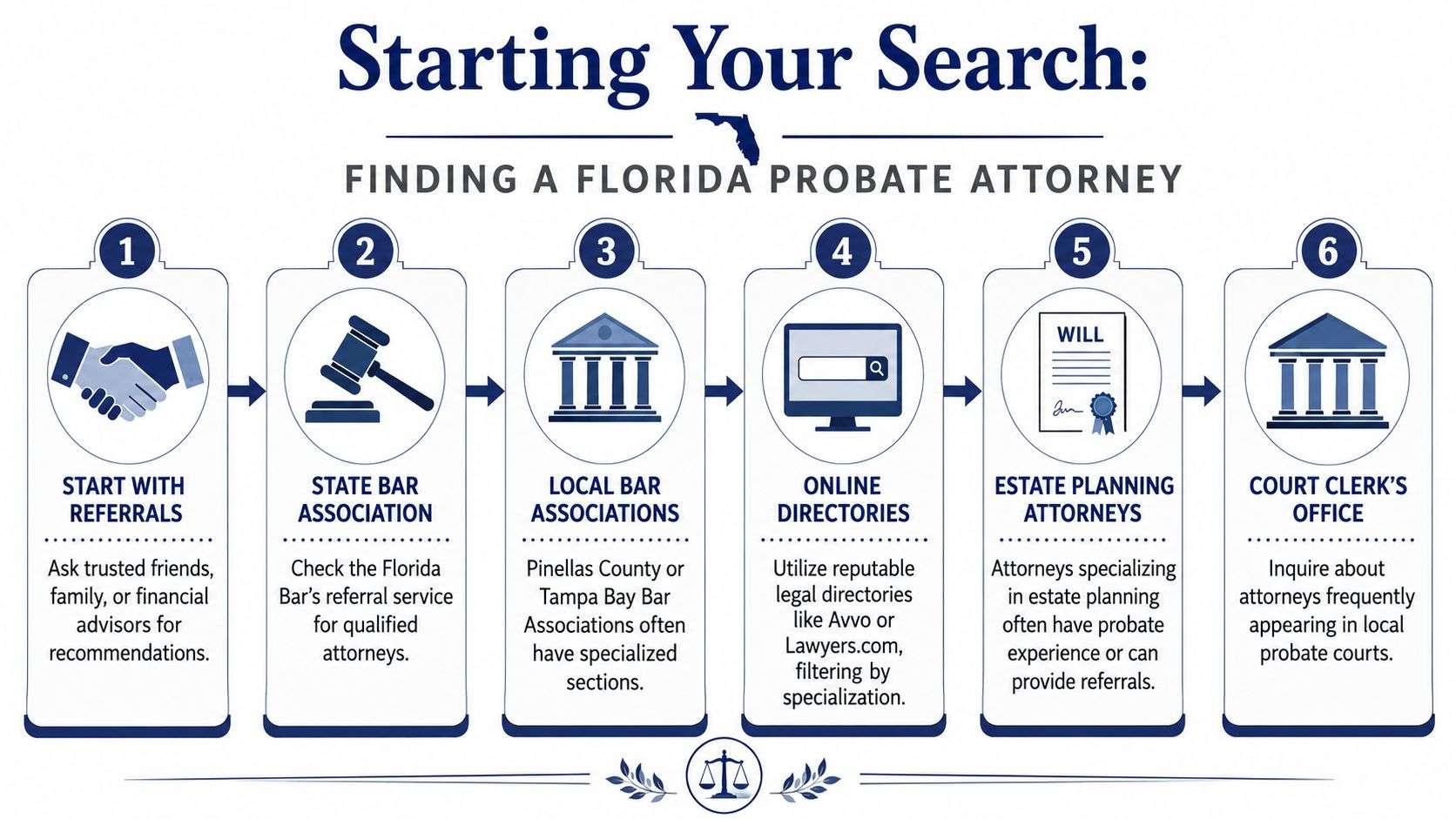
Start With Sources That Usually Produce Better Leads
The strongest leads usually come from people and organizations that have seen probate work up close.
Consider starting with:
- The Florida Bar referral tools: A useful starting point for finding licensed Florida attorneys instead of sorting through ads and directory pages.
- Local bar associations in the Tampa Bay area: Lawyers active in the local legal community often know who handles probate cases in this region.
- CPAs, financial advisors, and real estate agents: These professionals often see which probate lawyers return calls, keep documents organized, and close out estate-related transfers without avoidable delay.
- Estate planning attorneys: Some draft wills and trusts but refer out active probate files. Those referrals can be helpful if they come from lawyers who know the probate attorney's work.
- Public profiles and directories: Good for building a list, but not enough to make the hiring decision.
If you are not even sure whether the estate will center on a will, a trust, or both, read this overview of trust vs. will issues in Florida. It will help you describe the situation more clearly when you start calling firms.
What A Focused Search Looks Like In Practice
A good search result tells you what the lawyer does, where they do it, and whether they handle ordinary administration, contested matters, or both.
Look for signs like these:
- Local court familiarity: The lawyer references Pinellas County, Hillsborough County, Pasco County, or the broader Tampa Bay area.
- Probate-specific writing: The website discusses estate administration, creditor issues, homestead questions, beneficiary disputes, or personal representative duties.
- Clear service pages: You can tell whether the firm handles summary administration, formal administration, and probate litigation.
- Detailed attorney bios: The biographies show more than a law school name and a stock photo. They should give you a real sense of practice focus.
Be careful with firms that list probate beside personal injury, criminal defense, bankruptcy, and half a dozen unrelated practice areas without much detail. That setup does not automatically mean the lawyer is unqualified. It does mean you should ask harder questions before assuming probate is a regular part of the practice.
Build A Short List Before You Start Calling
Keep your first list wider than your final choice. Three to five names is usually enough for a Florida family to compare availability, communication style, and apparent fit without getting overwhelmed.
One local option in the Tampa Bay market is Oldham Law PLLC, which lists probate and trust administration among its practice areas. Treat that kind of listing as one useful data point. Then compare it with the lawyer's background, county familiarity, responsiveness, and how clearly the office explains the next steps.
This stage is about screening, not deciding. The goal is to find a few lawyers who appear equipped to handle your estate in Pinellas County or the broader Tampa Bay area, then vet them carefully before you hire one.
Evaluating Attorney Credentials And Specialization
Once you have names, shift from searching to vetting. At this stage, many families make avoidable mistakes. They hire based on proximity, a quick recommendation, or a good first impression without confirming whether the lawyer really focuses on probate.
Florida-based guidance describes a four-stage due-diligence workflow: build a shortlist with local search terms, verify specialization in probate and estates, validate credibility through bar status and disciplinary history, and interview candidates for communication and fit. That workflow appears in this Florida probate due-diligence guide.
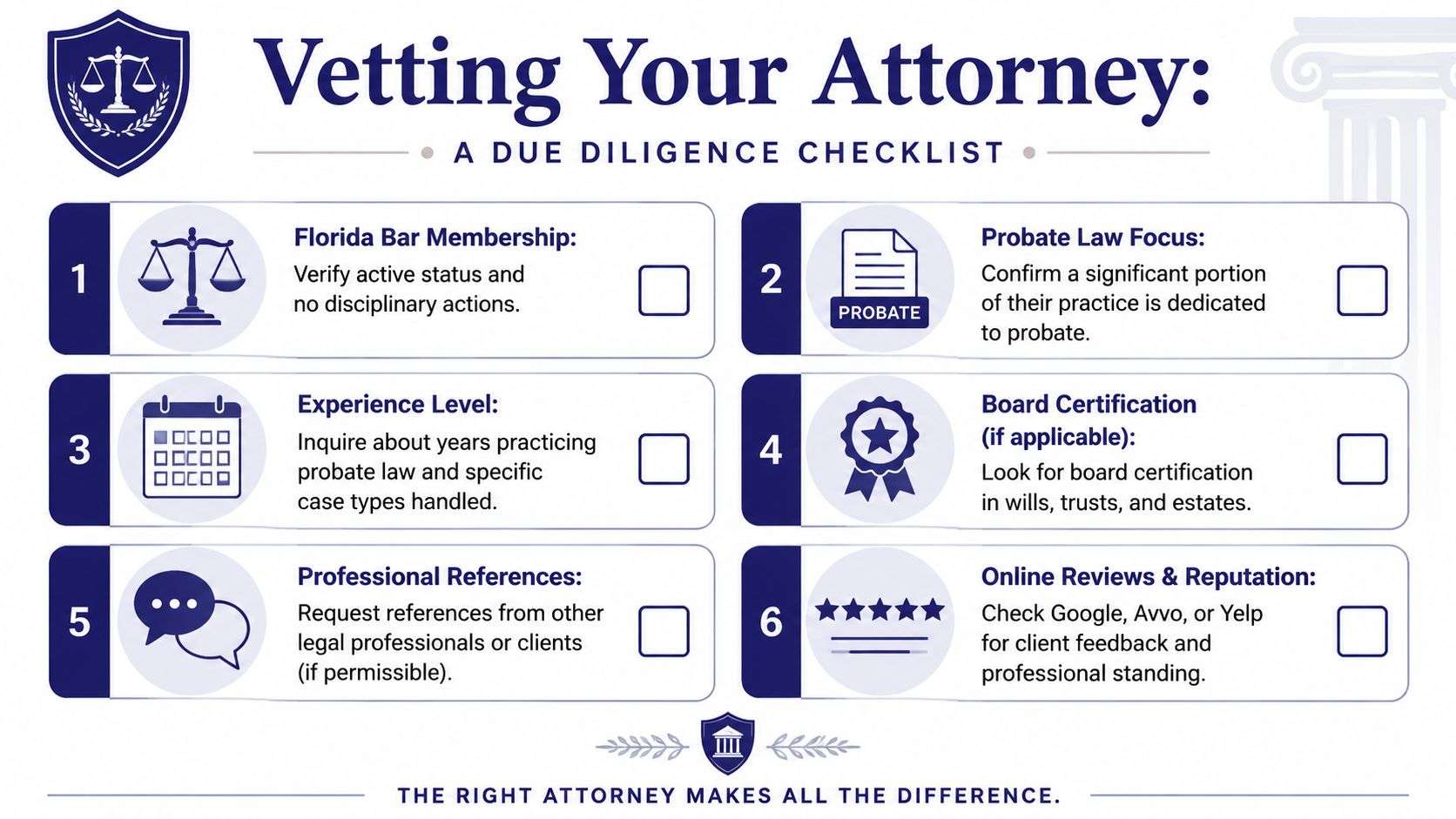
Verify The Basics First
Before you spend much time on reviews or branding, confirm the essentials.
- Florida Bar status: Make sure the attorney is active and in good standing.
- Disciplinary history: This doesn't answer every question, but it's part of basic diligence.
- Office and jurisdiction fit: A lawyer doesn't need to be around the corner, but local familiarity matters in probate practice.
- Practice focus: Read the site carefully. If probate is buried among many unrelated services, ask how much of the lawyer's actual work involves estates.
A family member naming someone “the probate lawyer we found online” doesn't mean much until you verify what that lawyer does week to week.
Read The Website Like A Skeptic
Attorney websites often sound similar. Look for substance.
A probate-focused lawyer usually publishes material that answers probate questions in practical terms. Their biographies often mention wills, trusts, estates, probate administration, fiduciary work, or probate litigation. Their consultation process is usually clear. Many also explain what information they want before a first meeting.
If you're helping an older family member who also needs broader incapacity planning, choosing a power of attorney is a separate but related issue worth understanding. It shouldn't be confused with hiring the right probate counsel for an estate that is already in administration.
Board Certification And What It Signals
In Florida, board certification in wills, trusts, and estates can be a meaningful credential. It is not required to handle probate, and a non-certified attorney may still be very capable. But if an attorney has that designation, it's a useful signal that probate and related estate matters are a serious part of the practice.
Treat it as one factor, not the factor.
The strongest shortlist usually comes from combining objective checks with a close look at whether probate is central to the lawyer's actual practice.
Key Questions To Ask During The Consultation
The consultation is not just for the lawyer to evaluate your case. It's for you to evaluate the lawyer's process. Florida probate guidance recommends focusing on process competence by asking how many similar probate matters the attorney has handled, what timeline to expect in your county, and whether the attorney can explain the administration steps in your jurisdiction, as outlined in this Florida consultation guidance for probate hiring.
The best consultations feel specific. The lawyer asks about the will, assets, debts, family structure, and any early signs of disagreement. They also tell you what documents they need to make an informed first assessment.
Questions About Experience And Fit
Start with direct questions that force a concrete answer.
- How many similar probate matters have you handled?
- Do you mostly handle routine administration, contested probate, or both?
- Have you worked on estates with issues like mine, such as real property, missing records, difficult family dynamics, or out-of-state assets?
The ‘fit your case type' issue is a practical reality. A lawyer may be perfectly competent and still not be the right match for your estate.
Questions About Process And Local Practice
Ask the attorney to walk you through the matter in plain language.
- What are the main steps in this probate matter from start to finish?
- What timeline should I realistically expect in this county?
- Are there local filing practices, forms, or court expectations I should know about?
If the lawyer can't explain the process clearly, that's a problem. Probate is stressful enough without hiring someone who speaks only in abstractions.
A good consultation should leave you with a cleaner mental timeline, even if some facts are still uncertain.
Questions About Communication
A technically strong lawyer who communicates poorly can still make the probate process much harder.
Ask:
- Who will be my primary contact?
- Will I hear from you directly, or mostly from staff?
- How do you typically handle updates and questions?
- What happens if a dispute appears in the middle of administration?
These questions matter because many client complaints are not really about legal substance. They're about silence, delay, and confusion.
If you're ready to have that conversation with counsel, requesting a probate consultation is often the fastest way to compare communication style and case approach.
Questions About What To Bring
A productive first meeting depends on preparation. Bring what you have, even if the file is incomplete.
Useful items often include:
- The will and any codicils
- Death certificate
- Basic asset information
- Names and contact information for beneficiaries or heirs
- Any notices, creditor information, or court papers already received
- A written timeline of concerns or family disputes
One of the most common problems is showing up empty-handed and expecting a reliable case assessment. Even a skilled probate lawyer works better with documents than with memory.
Understanding Costs And Identifying Warning Signs
Cost questions make people uneasy, especially when they're grieving and trying to protect estate assets. The right way to handle fees is not to hunt for the lowest quote. It's to understand how the lawyer charges, what work is included, and what could change the scope.
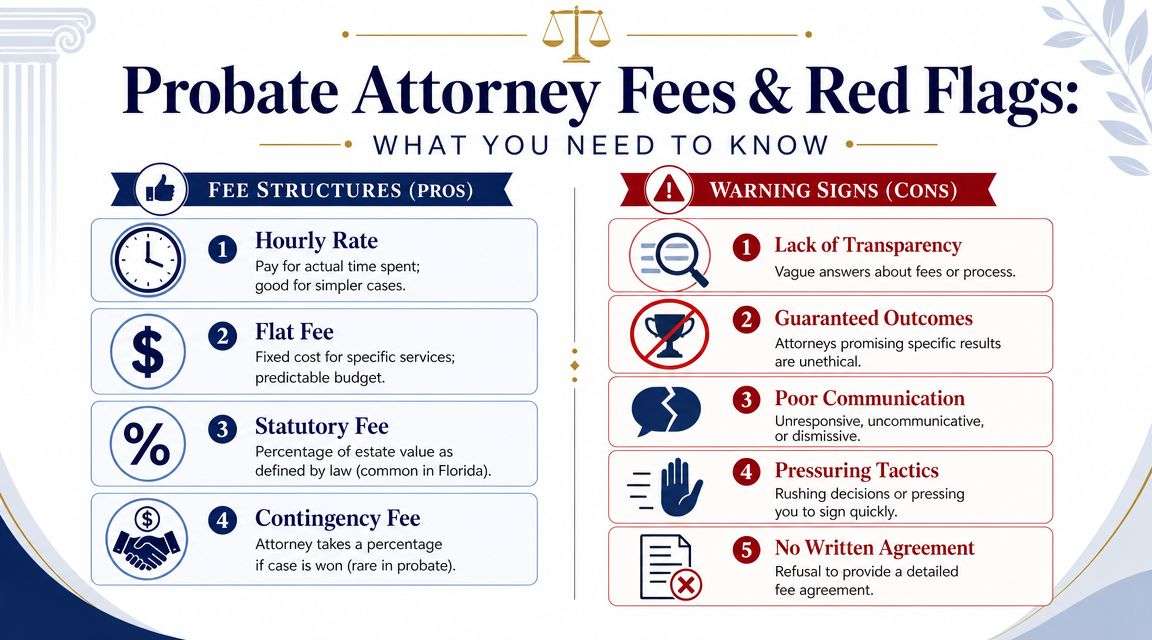
How Probate Fees Are Commonly Framed
Different probate matters call for different billing structures. A routine matter may lend itself to one approach, while a dispute-heavy matter may require another.
You may hear terms like:
- Hourly billing: Often used where the amount of work is harder to predict.
- Flat fee for defined services: More common when the scope is narrow and clear.
- Fee structures tied to estate administration rules: Sometimes discussed in Florida probate practice.
- Separate pricing for litigation-related work: If the case turns contested, the fee structure may change.
The key isn't memorizing fee labels. It's asking the attorney to explain what services are included, what is not included, and what events would increase cost.
Green Lights And Red Lights
Some hiring signals are easy to miss because families focus so heavily on credentials. The consultation itself often reveals more than the marketing.
Green lights usually include:
- A written fee agreement: Clear scope, clear billing method, clear expectations.
- Straight answers: The lawyer explains uncertainty without becoming evasive.
- A workable process: You understand who does what next.
- Professional responsiveness: Calls, emails, and scheduling are handled in an orderly way.
Red lights deserve attention:
- Vague talk about money: If the lawyer resists explaining fees, expect friction later.
- Guaranteed outcomes: Probate lawyers should not promise a specific result.
- Pressure to sign immediately: You should have room to review and think.
- Disorganization at intake: Missing follow-up, unclear document requests, and inconsistent communication often continue after you hire them.
If a lawyer can't explain the engagement clearly before you sign, don't expect clarity after the case begins.
Cheap Can Be Expensive
A lower initial quote can become costly if the lawyer lacks local procedural familiarity, misses issues early, or handles communication poorly. Probate work often turns on steady execution. Deadlines, notices, filings, and family communication all matter.
That's why the best value is usually not the cheapest option. It's the lawyer who can explain the likely path, identify the risk points, and manage the matter without creating unnecessary confusion.
Your Pinellas County Probate Attorney Hiring Checklist
By the time you reach a final decision, your goal is simple. You want a probate attorney who understands Florida practice, communicates clearly, and fits the type of estate you're dealing with in Pinellas County or the broader Tampa Bay area.
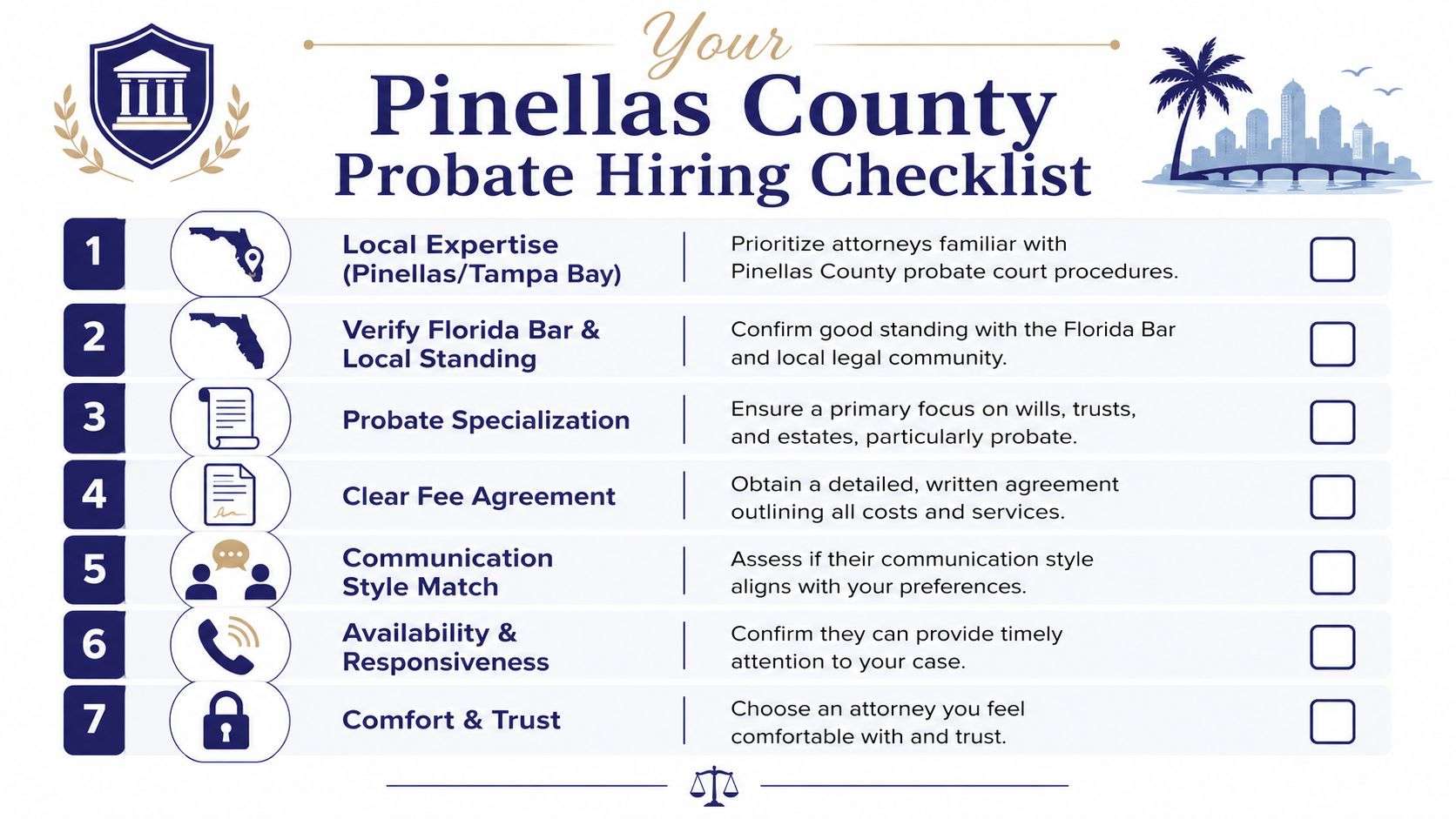
Use This Shortlist Test Before You Hire
A strong hiring process usually looks like this:
- Build a local list first: Focus on attorneys who appear to handle probate work in Pinellas County or nearby Tampa Bay courts.
- Confirm Florida credentials: Check bar status and look for signs that probate is a meaningful part of the practice.
- Match the lawyer to the case: Routine administration and contested probate are not the same job.
- Prepare for consultations: Bring documents, names, and a written summary of concerns.
- Compare communication styles: The right lawyer should answer questions clearly and set realistic expectations.
- Review the fee agreement carefully: You should know the billing structure and scope before signing.
- Trust disciplined judgment, not panic: Fast decisions made under stress are often the ones families regret.
What Matters Most In Pinellas County And Tampa Bay
Local procedural familiarity matters more in probate than many people expect. Even when the law is statewide, county practice, clerk processes, and courtroom expectations can shape how smoothly a matter moves. That's one reason local experience in the Tampa Bay area can be so useful.
Families also do better when they choose a lawyer who can spot likely friction early. In my experience, the most productive probate relationships begin with a calm, direct conversation about documents, timeline, responsibilities, and possible complications. They do not begin with overpromising.
If you need a starting point for local services, Oldham Law's probate practice page outlines the firm's work in probate and related estate matters in Florida.
A Good Hiring Decision Should Lower The Temperature
The right probate attorney won't remove the grief of a loss. But the right attorney should reduce uncertainty, create a plan, and help your family avoid preventable mistakes.
If you've been asking how do i find a good probate attorney, the answer is usually not “pick the first name you see.” It's this: choose someone with Florida probate focus, local procedural familiarity, a communication style you can work with, and experience that fits the kind of estate in front of you.
If you need practical probate guidance in St. Petersburg, Pinellas Park, or the greater Tampa Bay area, Oldham Law PLLC can help you evaluate the situation, understand the next steps, and determine what kind of probate representation fits your family's needs.
