

The question usually comes up when the situation is already costing you money. Rent has not come in. Calls and texts are going unanswered. You may be carrying the mortgage, insurance, taxes, and repairs while a tenant stays in possession of the property.
Florida landlords often want one simple answer to how long does eviction take in FL. The practical answer is this: a clean, uncontested case can move quickly, but the actual timeline depends on whether the notice was done correctly, whether the tenant responds, and how fast your local court and sheriff’s office are moving.
In Pinellas County and across the Tampa Bay area, that difference matters. The timeline you read in a statewide guide is the starting point, not always the finish line. If you own rental property and want to protect it without making a costly procedural mistake, understanding the actual sequence is critical. That same attention to detail is what matters in other Florida real estate matters, including real estate closings in Pinellas Park and St. Petersburg.
Table of Contents
- Navigating The Florida Eviction Process
- Understanding The Standard Eviction Timeline In Florida
- What Can Delay The Eviction Process In Florida
- Two Real-World Florida Eviction Scenarios
- Key Rights And Responsibilities During Eviction
- When You Need A Florida Real Estate Attorney
Navigating The Florida Eviction Process
A typical landlord call starts with urgency. The tenant missed rent. Promised payment never arrived. Then the landlord asks the question that matters most: how quickly can possession be recovered?
That urgency is understandable, but speed in an eviction case comes from precision, not pressure. Florida has a defined court process, and it works well when each step is handled correctly. It works poorly when a landlord uses the wrong notice, miscounts days, or tries to force the issue outside the court system.
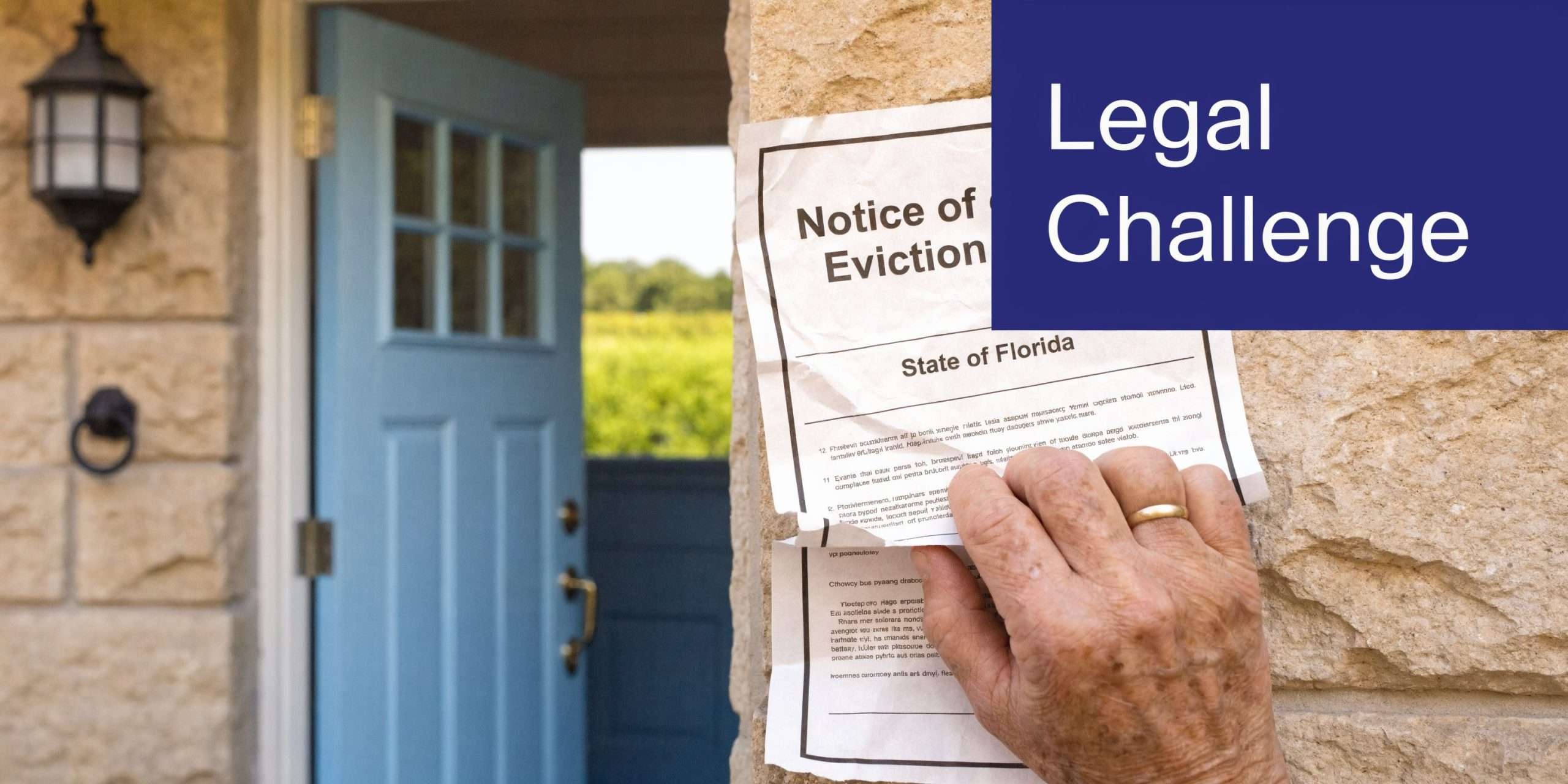
Florida is often considered a faster state for straightforward residential evictions, but the process still has stages that must happen in order. You begin with the correct written notice. If the tenant does not comply, the case moves into court. If the tenant does not respond, the case may end with a default judgment. If the tenant does respond, the matter can become much slower and more expensive.
Practical Takeaway: Most delay in Florida evictions is not caused by the law itself. It is caused by contested filings, local court scheduling, sheriff timing, or mistakes made before the case is even filed.
Landlords in the Tampa Bay area often run into a gap between the “paper timeline” and the “actual timeline.” Online summaries usually give a best-case range. They say much less about what happens when the clerk rejects paperwork, the tenant files a response on the last day, or sheriff scheduling slows the final handoff of possession.
That is why the right question is not only how long an eviction takes in Florida. The better question is what kind of eviction you are dealing with. The answer changes everything.
Understanding The Standard Eviction Timeline In Florida
A Pinellas landlord can do everything right on paper and still wait longer than an online timeline suggests. The statute may allow a relatively fast path in an uncontested case, but the actual timeline depends on whether the notice was drafted correctly, whether the clerk accepts the filing without corrections, and how quickly the sheriff handles the writ.
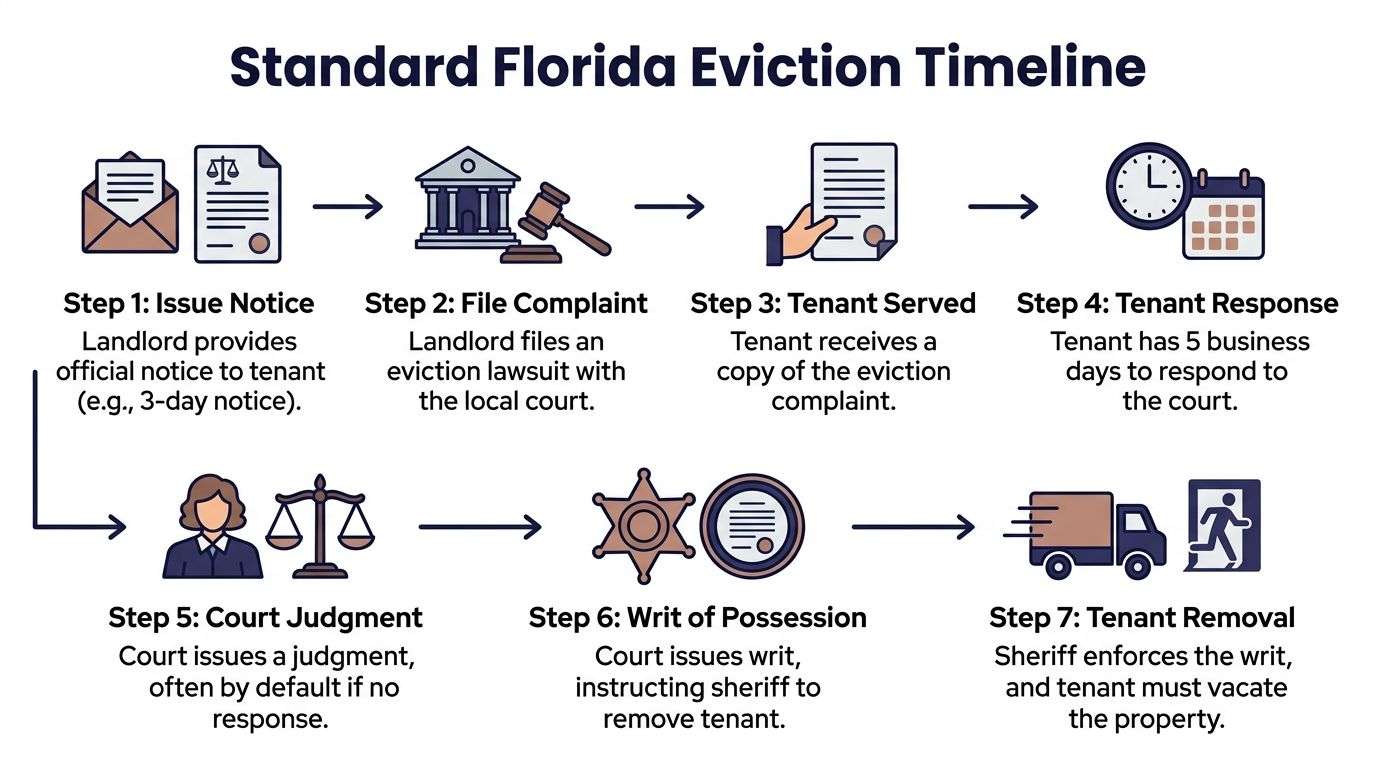
According to Korte & Peña’s Florida eviction timeline guide, an uncontested residential eviction in Florida often runs about 20 to 37 days from the initial notice through sheriff execution of the writ of possession. That is the clean version of the process. In Tampa Bay area files, it is better treated as a best-case range than a promise.
The Notice Stage Starts The Clock
Every eviction begins with the notice, and the notice must match the reason for removal.
For nonpayment, landlords usually serve a 3-day notice. For a curable lease violation, the usual starting point is a 7-day notice to cure. For certain serious or repeated violations, a landlord may use a 7-day unconditional notice. For terminating a month-to-month tenancy without alleging misconduct, the notice period is 30 days.
This is the step that causes many avoidable resets. If the notice uses the wrong language, includes the wrong amount, counts days incorrectly, or is served improperly, the court problem shows up later. By then, the landlord has often lost a week or more and has to start again. That same attention to paperwork and chain of title matters in other property disputes too, including issues tied to Florida title insurance and ownership review.
Filing And Service Move The Case Into Court
If the tenant does not comply with the notice, the landlord files the eviction complaint. In an uncontested case, filing is usually straightforward if the lease, notice, and service records are in order. The trouble starts when an attachment is missing, the names do not match, or the clerk rejects the packet for a technical issue.
A standard uncontested file usually moves through these stages:
- Notice period: The landlord must wait the full statutory period before filing.
- Court filing: The complaint, lease, notice, and supporting documents are submitted.
- Service of process: The summons and complaint must be served properly.
- Tenant response period: The tenant has 5 business days to respond after service.
- Default request or court setting: If no response is filed, the landlord can seek a default.
- Writ of possession: After judgment, the clerk issues the writ.
- Sheriff execution: The sheriff posts and enforces the writ.
That response window is a critical juncture in the process. If the tenant does not respond, the case may stay on the faster default track. If the tenant files anything on time, even a short handwritten answer, the case usually slows and becomes more expensive.
Default Judgment And The Final Removal Step
For landlords, the shortest uncontested path is a clean default. Douglas Firm’s Florida eviction timing summary explains two points that matter in practice. A properly posted or hand-delivered 3-day notice helps avoid dismissal, and a tenant who does not respond to a properly filed complaint can put the landlord in position to obtain a default judgment in about 5 business days.
Landlords often misunderstand the final phase. A judgment does not give the landlord the right to remove the tenant personally, change locks immediately, or set property outside. The court must issue the writ of possession, and the sheriff must carry out the final removal process. Until that happens, legal possession has not been restored.
In files, especially in Pinellas and nearby counties, the gap between judgment and possession is where landlords get frustrated. Online guides often compress that part into a line or two. On the ground, sheriff scheduling, clerk processing time, weekends, and filing cutoffs can add days even when nobody contests the case.
A practical uncontested sequence looks like this:
- Serve the correct notice.
- Wait the full notice period.
- File the complaint with the right attachments.
- Complete service on the tenant.
- Wait for the 5-business-day response deadline.
- Request a default if no response is filed.
- Obtain the writ and wait for sheriff enforcement.
Key Point: Florida can move quickly, but only in a clean file. The on-paper timeline assumes the notice is correct, the filing is accepted the first time, the tenant does not respond, and the sheriff can enforce the writ without delay.
What Can Delay The Eviction Process In Florida
A Florida eviction usually slows down for one of two reasons. The tenant forces the case onto a hearing track, or the landlord gives the court a reason to reject the file.
According to this Florida eviction delay analysis, contested evictions often last far longer than the clean, uncontested timeline landlords see in summary articles. That gap matters in practice. The on-paper sequence is short. The practical sequence can stretch once a response is filed, a hearing is needed, or the clerk kicks back the paperwork.
A Tenant Response Changes The Case
Once the tenant files a response, timing becomes less predictable. The case no longer follows the default path. The court may need to set a hearing, review rent issues, or address defenses tied to notice, service, or lease terms.
That usually creates delay in several places:
- More court settings: Hearings, motions, and rescheduled dates add time.
- Closer review by the judge: Notice language, rent ledgers, and service details get more attention.
- More factual disputes: Tenants often claim payment was made, notice was defective, or the amount demanded was wrong.
- Calendar pressure: In busy courts, the next available hearing date may not be immediate.
From a landlord's perspective, this is the point where the online timeline often stops being useful.
Landlord Errors Often Cause The Worst Delays
Many avoidable delays start before the complaint is even filed. I see this most often in self-filed cases where the landlord uses the wrong notice, misstates the rent due, or files without the documents needed to support the claim.
Common problems include:
- Miscounting the 3-day notice period: Florida excludes certain days. A bad count can invalidate the notice.
- Using the wrong type of notice: A nonpayment notice is different from a notice for lease violations.
- Poor proof of delivery: If the tenant challenges service, the landlord may have to start over.
- Incomplete filings: Missing lease copies, notices, or ledgers can delay review or lead to dismissal.
Those mistakes do not just add a few days. They can reset the case to day one. That is why careful landlords treat eviction paperwork the same way they treat other detail-sensitive property issues, including title insurance review for real estate transactions. Small drafting errors can create bigger problems later.
Attorney’s View: The files that move fastest are usually the least dramatic. Accurate notice, consistent numbers, complete exhibits, and no shortcuts.
County Processing Time Can Add Days After You “Win”
Many statewide guides make the process sound linear. Serve the notice. File the case. Get the judgment. Recover possession.
County processing is rarely that neat.
In Pinellas and the broader Tampa Bay area, landlords often underestimate the delay that can happen between each approved step. The clerk may not process a filing the same day. A hearing slot may not be available right away. After judgment, writ processing and sheriff scheduling can still add time before the unit is returned.
That practical gap is what many online summaries miss. A landlord may technically be entitled to possession, but still be waiting on court administration and sheriff enforcement.
What usually helps:
- Filing as soon as the notice period expires
- Keeping the lease, ledger, notice, and service proof organized
- Checking local filing requirements before submitting the complaint
- Following the legal process without threats, lockouts, or utility shutoffs
What usually causes more delay:
- Informal notice language that does not match Florida requirements
- Incorrect rent figures or inconsistent allegations in the complaint
- Last-minute scrambling for documents after the tenant files a response
- Assuming Pinellas or another Tampa Bay court will match a generic statewide timeline
The practical takeaway is simple. Florida eviction law allows for a relatively quick result in a clean case, but county workload, clerk processing, hearing availability, and sheriff scheduling often decide how long the case takes in life.
Two Real-World Florida Eviction Scenarios
A landlord in Tampa serves a proper notice on Monday and expects the unit back within a couple of weeks. Another landlord starts the same week, with the same lease violation, and is still waiting for possession long after the court signs the judgment. That difference is what separates the paper timeline from the working timeline in Florida.
Scenario One A Straight Nonpayment Case
Start with the file every landlord hopes for.
Rent is unpaid. The notice is drafted correctly, the amount is right, and delivery is documented. The tenant neither pays nor contests the case after service of the complaint.
In that setting, the case usually stays on the default track described earlier. There is no dispute over the ledger, no argument about notice language, and no hearing added to the calendar. If the paperwork is clean and each step is filed promptly, possession can move relatively fast by Florida standards.
This is the version of the process reflected in many online summaries. It exists. I see it. But it depends on a clean record and a tenant who does not engage the case.
Scenario Two A Contested Case In A Busy Florida Court
Now change one detail. The tenant responds.
That response can shift the case from a clerk-driven file to a judge-driven file. A hearing may be needed. The tenant may raise defenses that are weak on the merits but still require time to address. In practice, that means more waiting between steps, more document review, and more chances for a preventable error to matter.
In Pinellas and across the Tampa Bay area, the specific county often determines the actual timeline after the legal deadline has passed. A landlord may win the case and still wait on hearing availability, writ processing, or sheriff scheduling before the property is returned.
That delay creates business problems, not just legal ones:
- The unit stays offline longer.
- Lost rent keeps building.
- Repairs and turnover cannot be scheduled with confidence.
- Frustration rises, which is when landlords are most likely to make a mistake outside the court process.
The practical lesson is straightforward. While the paper timeline provides a legal minimum, the court calendar and enforcement schedule usually determine the date you recover possession.
If a case has become contested, getting advice early is often cheaper than fixing a bad notice, a weak complaint, or a hearing problem later. Landlords who need case-specific direction can schedule a Florida eviction consultation before a small procedural issue turns into a longer delay.
Key Rights And Responsibilities During Eviction
A landlord can be clearly owed rent and still lose weeks over a bad notice, a counting error, or an avoidable service problem. That gap between being right and getting possession is where many Florida eviction cases go off track, especially in busy counties where any mistake drops the file out of the faster path.

What Landlords Must Do
Treat the eviction file like a court record from day one. In practice, that means the notice, lease, rent ledger, delivery method, and complaint all need to line up. If one part is sloppy, the tenant has an opening to challenge the case or slow it down.
For landlords, the main responsibilities are practical:
- Use The Correct Notice: Nonpayment, noncompliance, and termination cases do not use the same notice.
- Count Time Correctly: Florida notice periods cause problems when landlords count too fast or include the wrong days.
- Keep Records Consistent: The amount demanded, the dates owed, and the lease terms should match across every document.
- Serve And File Properly: A strong claim can still stall if service or filing steps are handled poorly.
- Avoid Self-Help Tactics: Do not change locks, remove doors, shut off utilities, or take the tenant’s property without court authority.
This is usually where the practical timeline separates from the paper timeline. In Pinellas and the Tampa Bay area, a landlord who files a clean case often keeps moving. A landlord who files with a notice defect or weak records may spend far more time correcting the file than the online timeline suggested.
The same discipline applies outside eviction court. Landlords who regularly review leases, notices, and related documents before a dispute starts are in a better position to avoid preventable filing problems. That is one reason real estate contract review for Florida landlords and owners often pays off before an eviction is ever filed.
What Tenants Still Have The Right To Expect
Tenants still have the right to proper notice and a fair chance to respond. If they contest the case, the court has to consider that response, even if the landlord believes the defense is weak.
Judges expect procedure to be followed closely. They do not award possession just because the landlord has a good reason to be frustrated.
That point matters in real cases. A landlord may have months of missed rent, clear lease violations, and a tenant who is plainly in default. If the notice was defective or the paperwork does not match, the case can slow down or get dismissed and refiled. In counties with crowded dockets, that kind of reset costs more than filing fees. It can push back turnover, repairs, and the next rental cycle.
Rule of the road: correct procedure is what gets possession returned.
When You Need A Florida Real Estate Attorney
Some eviction cases are simple enough on paper that landlords assume they can handle them alone. Sometimes that works. Sometimes it turns a short file into a much longer one.
The point where legal help becomes valuable is usually earlier than landlords think. If the tenant has responded, if there is a dispute about notice, if the lease is unclear, or if the property is in a county with slower scheduling, the cost of a mistake goes up fast.
A Florida real estate attorney adds value in several practical ways:
- Choosing The Correct Notice First: This avoids the most common early failure.
- Reviewing The File Before Filing: Small document problems are easier to fix before they reach the clerk.
- Managing A Contested Response: Once the tenant answers, strategy matters.
- Protecting Against Illegal Shortcuts: Landlords under pressure sometimes make preventable errors.
- Reducing Friction In Busy Counties: Local filing habits, clerk expectations, and court practice matter.
This is especially true in the Tampa Bay area, where the difference between a statewide estimate and the local reality can affect possession planning. For many landlords, the goal is not just to file an eviction. The goal is to recover possession as efficiently and lawfully as possible.
If your case involves tenant defenses, repeated delay, or uncertainty about the correct next step, getting Florida-specific legal guidance early is often the better business decision. For broader support with property disputes and real estate matters in this region, landlords can also review Florida real estate legal services in St. Petersburg and Pinellas Park.
If you need practical guidance on an eviction, lease dispute, or other Florida real estate matter, Oldham Law PLLC serves St. Petersburg, Pinellas Park, and the greater Tampa Bay area with direct, Florida-focused counsel. The firm helps clients build a clear game plan, avoid procedural mistakes, and move forward efficiently.
